
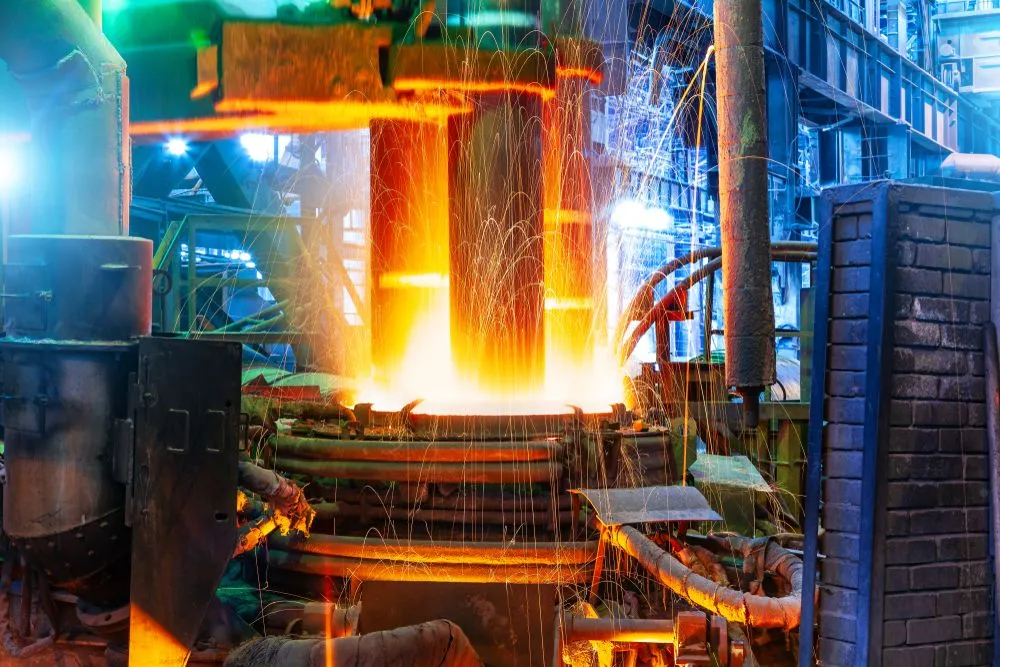
Before metal can be poured into a mold, it has to be melted, and the choice of melting furnace decides a great deal: energy cost, control of chemical composition, cleanliness of the molten metal, and the emissions produced. As with choosing a casting method, choosing a furnace is about matching the technology to the type of metal, the production volume, and the quality requirements.
Cupola Furnaces: The Classic Workhorse for Cast Iron
A cupola is a vertical shaft furnace charged from the top with alternating layers of coke, pig iron, scrap, and limestone flux. Air is blown in from the bottom to burn the coke, and the molten metal flows out from the base of the furnace.
Advantages: relatively low investment and operating costs, continuous operation with a high melting rate, and a long history as the standard for high-volume cast iron production.
Limitations: less precise control of chemical composition, because the metal is in direct contact with the coke and furnace atmosphere, making carbon and sulfur content hard to control. Dust and gas emissions are also higher, so an adequate emission control system is needed.
Induction Furnaces: Clean and Precise
An induction furnace melts metal using an electromagnetic field that induces eddy currents directly in the metal, so heat is generated inside the metal itself without burning fuel. The two main types are coreless (for melting various alloys in batches) and channel (usually for holding large volumes of molten metal).
Advantages:
- Alloy composition is easy to control because there is no contamination from fuel
- The natural stirring effect of the electromagnetic field helps homogenize the molten metal
- Flexible across many metals: iron, steel, aluminum, copper, and their alloys
- Lower emissions than fuel-fired furnaces
Limitations: an induction furnace essentially only melts; it does not refine. The charge material must be clean and controlled, because impurities do not separate out on their own. Electricity is also the main operating cost. Managing the charge and slag remains critical to avoid dirt being trapped in the casting as inclusions.
Electric Arc Furnaces (EAF)
In an electric arc furnace, an arc between graphite electrodes and the metal charge produces very high temperatures. EAFs are widely used to melt steel, especially from scrap, and can handle large capacities.
Advantages: large capacity, very high temperatures suited to steel, and the ability to carry out some refining through good slag practice. Using scrap as a feedstock also makes EAFs relevant to the steel recycling trend.
Limitations: very high power demand and high upfront investment, so they are generally more viable for medium to large steel foundries.
Crucible and Holding Furnaces for Non-Ferrous Metals
For aluminum, copper, brass, and bronze in smaller batches, foundries often use crucible furnaces heated by gas, oil, or electrical resistance. The metal sits in a graphite or silicon carbide crucible heated from the outside.
Advantages: simple, relatively low cost, and easy to switch alloys between batches. Limitations: lower energy efficiency and limited capacity. For continuous production lines such as aluminum die casting, holding furnaces keep molten metal at a consistent pouring temperature. Material considerations for these metals are covered further in non-ferrous metal casting .
How to Choose the Right Furnace
| Factor | Cupola | Induction | Electric arc | Crucible |
|---|---|---|---|---|
| Main metal | Cast iron | Iron, steel, non-ferrous | Steel | Non-ferrous |
| Composition control | Medium | High | Medium to high | Medium |
| Production scale | Large | Small to large | Large | Small to medium |
| Energy source | Coke | Electricity | Electricity | Gas/electricity |
| Need for clean charge | Low | High | Medium | Medium |
Other factors that should not be overlooked: electricity tariffs or fuel prices at the foundry’s location, availability of skilled operators, emission regulations, and production growth plans. Foundries that handle many alloys in small batches usually lean toward induction, while low-cost, high-volume cast iron production can still rely on cupolas when emissions are under control.
Related Articles
- Choosing Materials for Metal Casting: Cast Iron, Cast Steel, and Aluminum Alloys
- Non-Ferrous Metal Casting: Copper, Brass, and Bronze
- Other Metal Casting Methods: Centrifugal, Continuous, and Lost Foam Casting


