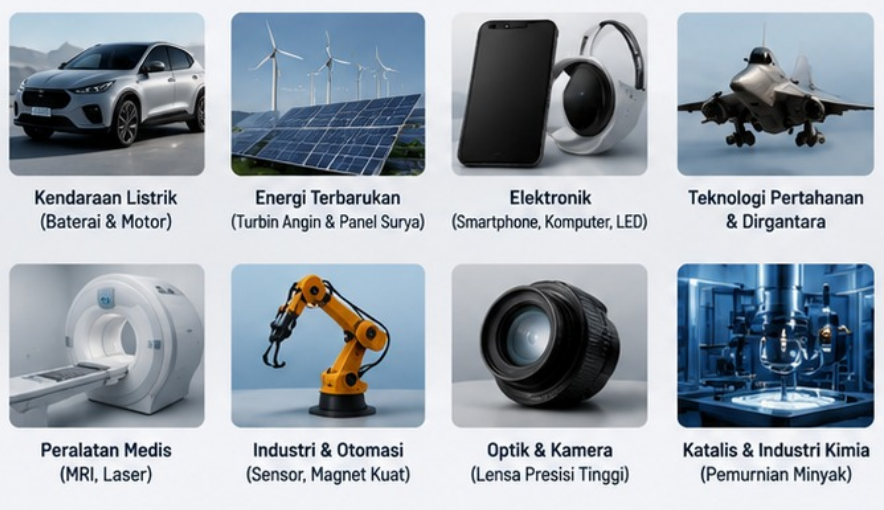
Rare earth elements are often described as key materials for the clean energy transition, used in the magnets of electric vehicle motors and wind turbines. Yet obtaining them is not entirely clean. From mining to separation into individual elements, the rare earth supply chain carries environmental challenges that need to be understood, especially by countries planning downstream development such as Indonesia.
Mining and Initial Processing
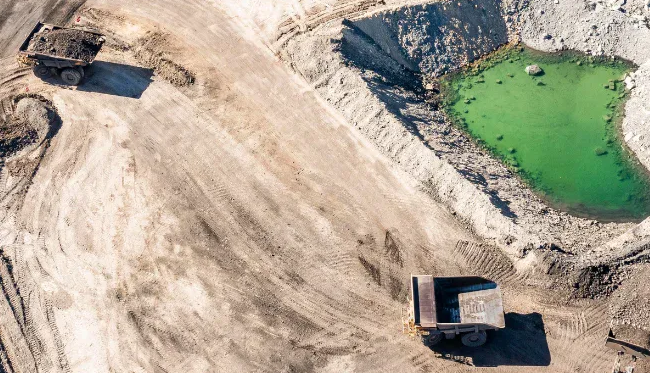
Landscape change and waste rock volume. Rare earth concentrations in ore are generally low, so the volume of rock that must be excavated and processed is large compared with the final output. The result is extensive open land and waste rock piles.
Tailings. After minerals are concentrated (for example by flotation), the remaining fine material, known as tailings, is held in ponds or impoundments. Tailings must be managed carefully to avoid contaminating groundwater and surface water, or failure of the containment structure.
Ion-adsorption clay mining. Some deposits, particularly those rich in heavy rare earths, occur as clays to which metal ions are attached. Extraction uses chemical solutions passed through the soil. Without proper control, this method risks contaminating soil and groundwater and can trigger landslides and land degradation.
Refining and Separation
As explained in Rare Earth Extraction and Refining, ore is broken down with strong acids or concentrated alkalis, and elements are then separated through a series of solvent extraction stages. The environmental impacts include:
- Acid and alkali waste from the ore-cracking stage, which must be neutralized before release or storage
- Wastewater carrying salts and nitrogen compounds (such as ammonium) from precipitation and separation steps
- Large volumes of organic solvents in element separation , which require closed-loop circuits to prevent leaks or evaporation
- High energy and water consumption, due to the many separation stages required
Natural Radioactivity: A Frequently Misunderstood Issue
Many rare earth-bearing minerals, such as monazite and bastnasite, naturally contain small amounts of radioactive elements, mainly thorium and uranium. This is not contamination but part of the minerals’ geochemistry.
The consequence: processing can concentrate these radioactive elements into residues and tailings, making the waste a form of naturally occurring radioactive material (NORM) that requires storage, monitoring, and reporting under applicable regulations. For workers, exposure to dust and radon in processing areas must also be controlled with adequate ventilation and protective equipment.
This is relevant for Indonesia, since the potential for rare earth byproducts in tin mining tailings is linked to monazite, making radioactivity management and compliance with nuclear regulators an important part of project planning.
Carbon and Energy Footprint
Beyond waste, there is a carbon footprint from the energy used for mining, crushing, chemical refining, and separation. Because of the sheer number of stages, energy per kilogram of pure product can be far greater than for many other industrial metals. The electricity source used by refining facilities strongly influences the final carbon footprint.
Mitigation Efforts Under Way
Better tailings management. Lined storage, groundwater monitoring, mine closure plans, and tailings dewatering (dry stacking) reduce the risk of contamination and dam failure.
Closed loops and chemical recycling. Returning acids, alkalis, and solvents to the process reduces new waste volumes.
Alternative separation technologies. Research on membranes, ion exchange, and biosorption points toward processes that reduce organic solvent and concentrated chemical use.
Recycling. Recovering elements from used magnets and electronics reduces the need for new mining, as discussed in Recycling Rare Earth Elements from E-Waste.
Supply chain standards and transparency. Industrial buyers increasingly demand verified origin and environmental practices, making reporting standards and audits part of a project’s competitiveness.
Balancing the Energy Transition and Environmental Burden
Reliance on rare earths for clean technology does not remove the need to limit the impact of their own supply chain. For policymakers and investors, adequate environmental management costs should be counted from the feasibility study stage, because projects that ignore them risk delays, remediation costs, and social opposition. Conversely, understanding these issues helps readers assess “green” claims more critically: clean technology at the point of use still needs to be viewed alongside the environmental footprint of its raw materials.
Related Articles
- Rare Earth Extraction and Refining
- Indonesia’s Rare Earth Downstream Push
- Recycling Rare Earth Elements from E-Waste
- Rare Earth Element Separation Technology: Solvent Extraction Explained