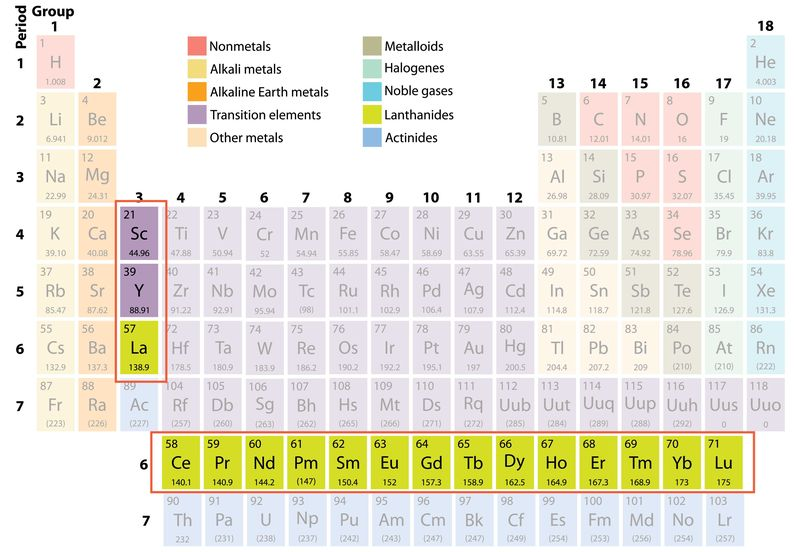
Throughout this rare earth elements (REE) cluster, we’ve covered the basics, Indonesia’s downstream potential, the complexity of extracting and refining them from mined ore, and how REEs have become a bargaining chip in global geopolitics. One common thread runs through all of it: producing rare earths from raw ore is expensive, complicated, and heavily dependent on a small handful of countries.
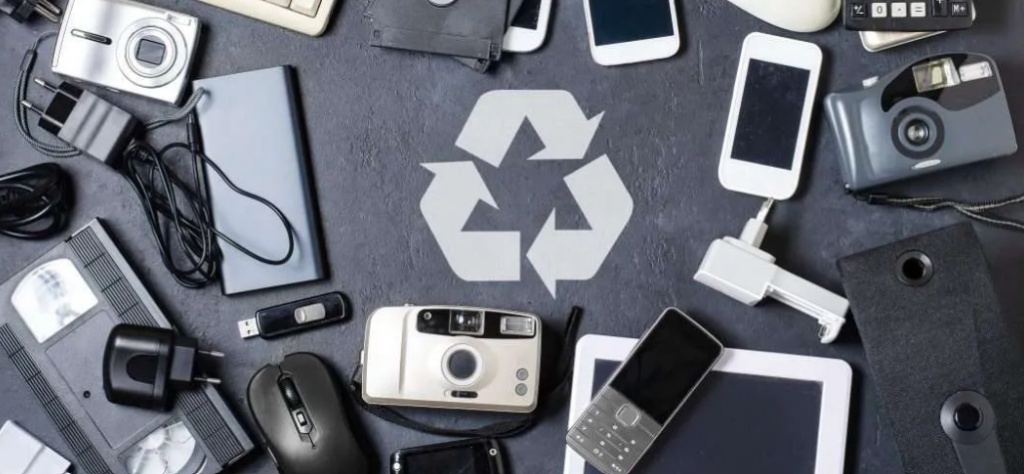
That’s why many are now looking at an alternative source that’s already sitting around us: old electronic devices. This approach is known as urban mining — extracting valuable metals from urban waste rather than the earth.
Why Can E-Waste Be a Source of Rare Earth Elements?
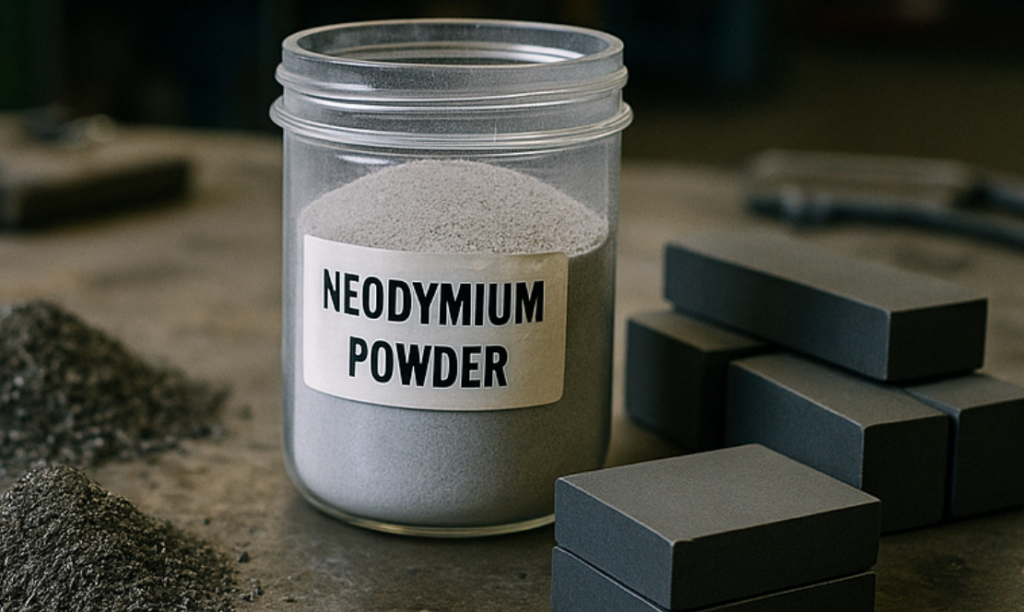
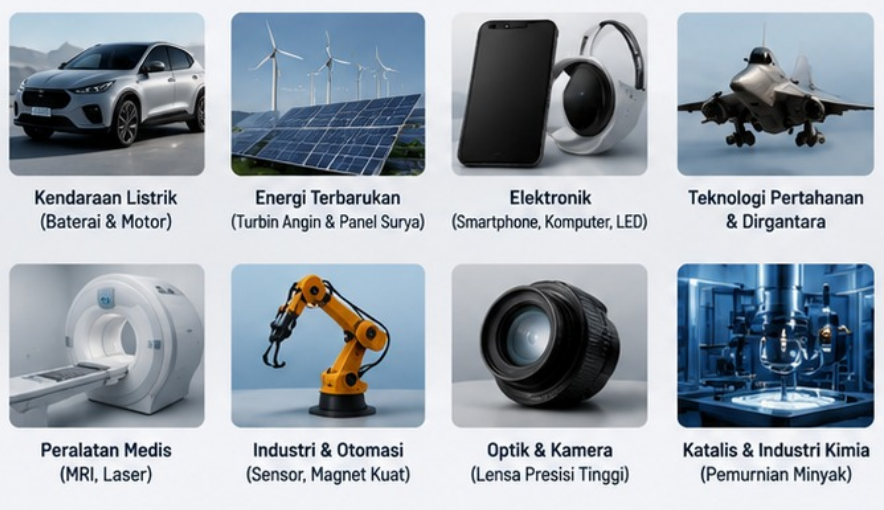
Neodymium-iron-boron (NdFeB) permanent magnets are one of the most widely used REE applications — found in computer hard drives, EV motors, speakers, wind turbines, and countless household electronics. Every time a laptop, hard drive, or electric motor gets tossed in the trash, strategic elements like neodymium, praseodymium, and dysprosium go with it — the very elements that are so difficult and expensive to produce from mined ore.
This is increasingly relevant given the growing pile of e-waste worldwide. To put it in perspective, the average Indonesian household is estimated to own at least six electronic devices — computers, laptops, tablets, smartphones — that could become a source of valuable metal if managed properly, rather than ending up in a landfill.
How Does the Recycling Technology Work?
In principle, recycling REEs from e-waste isn’t all that different from the extraction process from mined ore we’ve already covered — except the “ore” here is electronic components like used permanent magnets, rather than minerals like monazite or xenotime. Several countries have already begun building dedicated facilities for this:
- In Italy, a facility in Ceccano is being built as the EU’s first REE recycling hub. It uses advanced hydrometallurgical technology developed by the University of L’Aquila to extract neodymium, praseodymium, and dysprosium from used computer hard drives, electric motors, and other electronics. Initial processing capacity is around 20 tonnes of permanent magnets per year, targeted to scale up to 2,000 tonnes annually at full operation — with output expected to reach 500–700 tonnes of high-quality rare earth compounds per year.
- In Germany, technology company Heraeus is building a facility in Bitterfeld billed as Europe’s largest rare earth magnet recycling plant, with an initial production target of around 600 tonnes of magnet powder per year and plans to double capacity to 1,200 tonnes.
- In the United States, a similar approach is being applied to EV batteries — Redwood Materials, for example, has developed a recycling system to recover lithium, nickel, and cobalt from used batteries, though its main focus isn’t rare earths specifically.
The Challenge: Promising in Theory, Not So Simple in Practice
While the concept sounds promising, the reality on the ground shows REE recycling still faces a steep climb. Heraeus’s facility in Germany, for instance, acknowledged a year into operation that production capacity was still far from full and the company was still struggling to break even — even though the project is considered strategically important for Europe in the long run.
Several factors keep e-waste REE recycling from replacing conventional mining anytime soon:
- Still-small volumes — total output from existing recycling plants remains far below the demand supplied by mining.
- Collection and sorting costs — REE magnets are scattered across millions of individual devices in consumers’ hands, unlike mined ore concentrated in one location.
- Separation complexity — as covered in our extraction article, separating rare earth elements with near-identical chemical properties still requires a complex hydrometallurgical process, regardless of whether the source is mined ore or electronic waste.
The Opportunity for Indonesia
For Indonesia, urban mining from e-waste holds significant potential that has rarely been taken seriously so far. Some countries have already integrated e-waste processing into their green industry supply chains — China, for example, links its e-waste processing facilities to its solar panel industry and other clean energy infrastructure.
With the volume of devices in circulation growing every year, Indonesia is effectively sitting on a sizable “urban mine” opportunity. The challenge isn’t just extraction technology — itself still a major homework item, as discussed in our earlier article — but also building an e-waste collection ecosystem that remains very underdeveloped at both the household and industrial level.
Conclusion
Recycling rare earth elements from e-waste isn’t a silver-bullet solution that will replace mining anytime soon, but it offers something conventional mining doesn’t: the potential to reduce dependence on a handful of supplier countries while cutting the environmental impact of new mining activity. Amid the supply chain geopolitics we’ve already discussed, the ability to recycle REEs from secondary sources like e-waste could become an additional layer of defense for countries looking to reduce their vulnerability — Indonesia included, given the substantial and ever-growing volume of e-waste it generates each year.