Following the case studies on automotive, oil and gas, and other sectors, the heavy equipment and mining industry brings very specific demands: components must survive extreme loads, constant abrasion, and working conditions far harsher than most other industrial applications.
Key Cast Components in Heavy Equipment
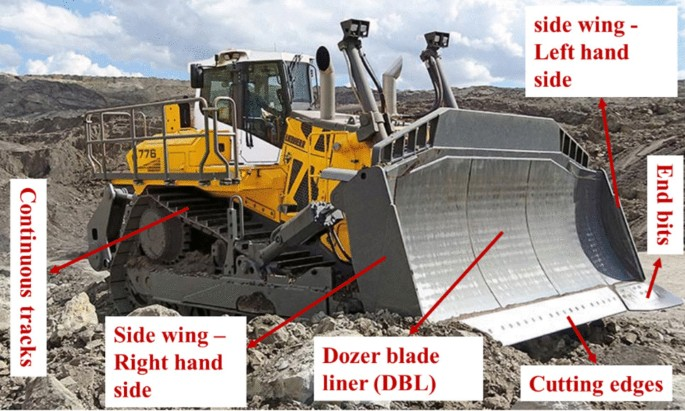
Bucket teeth and excavator components. Excavator and loader bucket teeth face extreme abrasion when digging hard material and usually use high-manganese cast steel. This steel has a unique property: its surface hardens progressively under impact during use (work hardening), while the core stays tough.
Mining crusher components. Crusher jaws, liners, and other rock-crushing components need extreme wear resistance and often use special cast steel alloys or very hard white iron to withstand constant impact and friction with hard rock.
Transmission and final drive components. Gearbox housings and transmission components on heavy equipment usually use cast steel or ductile iron, designed to handle high torque loads and constant vibration during heavy work on difficult terrain.
Counterweights and structural components. Counterweights on cranes and other heavy equipment use simple mass-produced cast iron, similar to the principle discussed in the household appliance case study but on a much larger scale.
The Challenge of Extreme Wear Resistance
Unlike most other industries, the main challenge in mining and heavy equipment is not only mechanical strength but wear resistance against constant abrasion:
High-manganese (Hadfield) steel. This alloy, typical for high-impact applications, has a distinctive behavior. It is relatively soft and easy to machine in normal condition, but its surface hardens dramatically under repeated impact, creating a very hard surface layer while the core remains tough enough to absorb impact energy without cracking.
High-chromium white iron. For applications that prioritize pure abrasion resistance (rather than impact), high-chromium white iron forms a very hard carbide structure, with the trade-off of much lower toughness than manganese steel.
Hardfacing and additional surface layers. Some critical components receive an extra hardfacing layer through special welding processes after casting, adding a highly wear-resistant material to areas in direct contact with abrasive material.
Operating Conditions That Challenge Design and Production
Very large, heavy components. Many mining equipment components are massive. A large mining excavator bucket can weigh tens of tons, requiring foundry capacity and gating and riser systems designed specifically for very large mold volumes.
Extreme operating environments. Mining equipment operates in heavy dust, extreme temperatures (very hot in open-pit mines or very cold at some mine sites), and constant vibration, which calls for much larger design safety margins than standard applications.
Very expensive downtime. Component failure on mining equipment means stopping mine production, which is extremely costly per hour. This pushes component quality and reliability standards far above pure production cost considerations, unlike cost-driven sectors such as household appliances.
The Role of Inspection and Service Life Prediction
Because failure is so expensive, the heavy equipment industry relies heavily on preventive inspection programs and component life prediction:
Routine inspection of critical components combines visual checks, ultrasonic testing, and measurement of material thickness lost to abrasion, helping predict when a component needs replacing before it fails suddenly in the field.
Analysis of operating data, in line with the broader Industry 4.0 trend, is increasingly used to predict component wear patterns from actual operating data, allowing more precise replacement planning than fixed maintenance schedules.
Lessons from a Sector Focused on Extreme Durability
This case study confirms that material design priorities depend heavily on the dominant failure mechanism. Here, wear and impact resistance matter far more than the low weight or appearance that dominate other sectors. For foundries serving this sector, mastering the metallurgy of special wear-resistant alloys such as high-manganese steel is the core competence that sets successful players apart in a very demanding market.