Following the case studies on automotive, power and energy, and household appliances, the shipbuilding (marine) industry brings very specific challenges: components must last for decades in highly corrosive seawater while carrying mechanical loads and constant vibration from ship operation.
Key Cast Components in Shipbuilding
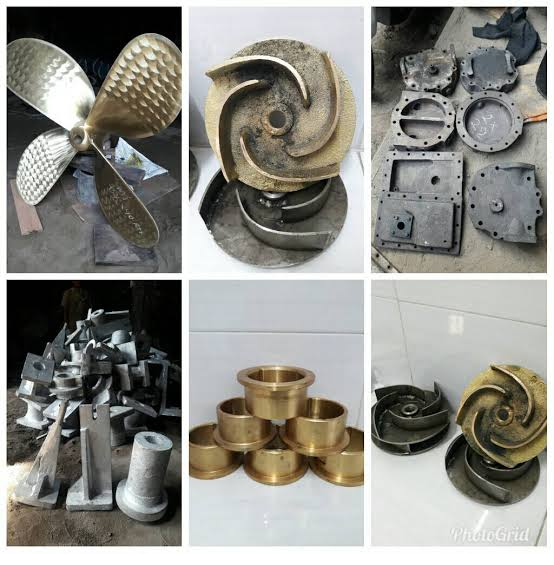
Ship propellers. One of the most iconic applications of cast bronze, especially nickel-aluminum bronze, which combines outstanding seawater corrosion resistance with enough mechanical strength to withstand thrust forces and cavitation in service.
Marine engine components. Engine blocks, turbocharger housings, and structural parts of marine diesel engines usually use cast iron or cast steel, chosen for the mechanical strength needed to handle the pressures and vibration of large engines.
Valves and pipe fittings. Piping for fuel, ballast water, and engine cooling systems makes wide use of valves and fittings in cast bronze or cast stainless steel, given the constant exposure to seawater and various chemical fluids on board.
Anchors and deck structural components. Anchors and various structural deck hardware usually use cast steel designed to handle extreme mechanical loads and harsh marine weather.
The Challenge of Extreme Corrosion Resistance
The marine environment is one of the toughest corrosion challenges in industry, combining several of the mechanisms covered in types of metal corrosion:
Galvanic corrosion between dissimilar materials. Ships have many different metal components in contact with each other in a seawater electrolyte, creating a significant risk of galvanic corrosion if material combinations are not considered carefully at the design stage.
Pitting corrosion from high chloride levels. The high chloride content of seawater makes certain stainless steel grades prone to pitting, pushing the choice toward grades with higher molybdenum content for critical applications.
Biofouling and corrosion linked to marine organisms. Marine organisms growing on metal surfaces can create micro-environments that speed up local corrosion, especially in areas that are hard to clean regularly.
Corrosion Protection Strategies in Use
Cathodic protection systems. Almost all modern ships use sacrificial anodes made of zinc or aluminum fitted to the hull. These anodes sacrifice themselves electrochemically to protect the ship’s main steel structure, the same principle used against galvanic corrosion.
Choosing materials by exposure zone. Components permanently submerged in seawater (such as propellers) use the most corrosion-resistant materials, such as nickel-aluminum bronze, while components exposed only to spray or humid sea air can use materials with adequate but more economical corrosion resistance.
Coatings and protective layers. Hulls and many external components use special multi-layer marine coating systems designed to resist water abrasion, UV light, and biofouling at the same time.
Regular inspection and maintenance. Because structural failure at sea has very serious consequences, ships undergo routine inspection, including visual checks and sometimes non-destructive testing on critical components such as propellers and propeller shafts, on schedules set by international classification society rules.
Special Considerations for Propellers
As a closer example, propeller production combines a unique set of challenges: complex, high-precision blade geometry for optimal hydrodynamic efficiency, combined with the need for a material that resists cavitation (surface damage from collapsing bubbles in high-speed flow) as well as extreme corrosion. Production often uses investment casting for medium-sized high-precision propellers, or sand casting for the very large propellers on cargo ships and tankers.
Lessons Across Industries
This shipbuilding case study underlines the importance of understanding specific operating conditions in depth before choosing materials and casting processes. The combination of extreme corrosion resistance, significant mechanical loads, and an expected service life of decades calls for a far more conservative and proven design approach than sectors with shorter product life cycles, such as consumer electronics.