
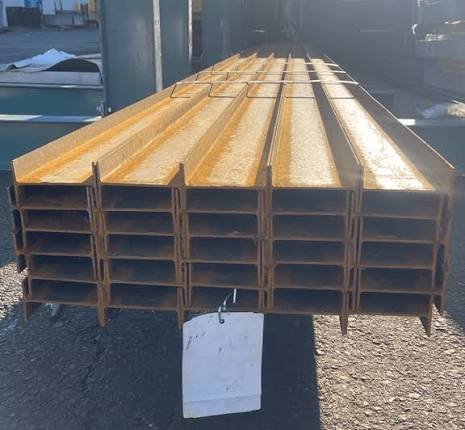
Low-carbon steel is steel with a carbon content of up to about 0.25%. Some references set the limit at 0.30%. It is also known as mild steel. Of all the steel produced worldwide, this is the most widely used type, because it is cheap, easy to form, and easy to weld.
Composition
The main element is iron, with these additions:
- Carbon (C): about 0.05–0.25%
- Manganese (Mn): about 0.3–1.5%, which adds strength and ties up sulfur
- Silicon (Si): up to about 0.4%, left over from deoxidation
- Phosphorus (P) and sulfur (S): kept as low as possible because they make steel brittle
The microstructure is mostly ferrite, which is soft and ductile, with a small amount of pearlite. The higher the carbon content, the more pearlite forms, so the steel becomes stronger but less ductile.
Key Properties
Ductile and easy to form. Low-carbon steel can be bent, rolled, drawn into wire, and deep drawn without cracking.
Easy to weld. Low carbon means the area around the weld does not harden and crack easily. Almost all common welding processes can be used without preheating for typical plate thicknesses.
Moderate strength. As a guide, general structural steel such as SS400 has a tensile strength of 400–510 MPa, and ASTM A36 has a minimum yield strength of about 250 MPa.
Cannot be hardened by quenching. There is too little carbon to form hard martensite. When a hard surface is needed, carburizing is used, which adds carbon to the surface layer before hardening. See the basics in our heat treatment article.
Rusts easily. Without protection, low-carbon steel corrodes quickly. Paint, galvanizing (zinc coating), or another coating is almost always needed. See types of metal corrosion.
Compared with Medium- and High-Carbon Steel
| Low carbon | Medium carbon | High carbon | |
|---|---|---|---|
| Carbon content | up to ~0.25% | ~0.25–0.60% | ~0.60–1.0% and above |
| Strength and hardness | Moderate | High | Very high |
| Ductility | Very good | Moderate | Low |
| Weldability | Very good | Needs care | Difficult |
| Hardenable | Surface only | Yes | Yes |
| Typical uses | Frames, plate, pipe | Shafts, gears, rails | Springs, chisels, steel wire |
Common Grades
- ASTM A36: general structural steel for plate and sections.
- SS400 (JIS G3101): the equivalent widely used in Asia.
- S235JR and S275JR (EN 10025): common European structural grades.
- AISI 1010–1020 or S10C–S25C (JIS G4051): bar steel for light machine parts and carburized parts.
- SPCC (JIS G3141) and SPHC (JIS G3131): cold-rolled and hot-rolled sheet for pressed parts.
Designations and composition limits differ between standards, so always check the mill certificate before treating two grades as equivalent.
Low-Carbon Steel as Castings
Besides rolled products, low-carbon steel is also cast. Examples include cast steel grades SC410 or SC450 (JIS G5101) and ASTM A216 WCB for valve bodies and pressure pipe fittings. Cast steel is chosen when a part is too complex to fabricate from plate but still needs to be ductile and weldable.
Compared with cast iron, cast steel is harder to pour. Its melting point is higher, it flows less easily, and it shrinks more, so it needs larger risers. The two materials are compared in our article on what cast iron is, and the process is covered in metal casting basics.
Uses
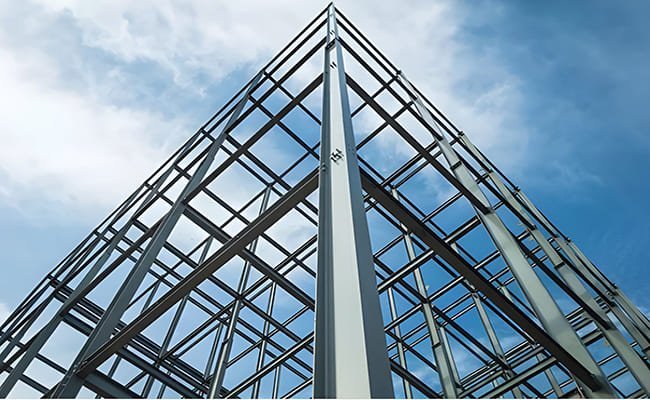
- Construction: frame sections, plate, reinforcing bar, roofing and wall sheet.
- Automotive: body panels, frames, and pressed parts.
- Piping and tanks: water pipe, low-pressure gas pipe, storage tanks.
- Everyday goods: wire, nails, bolts, furniture, cans (after tin coating).
- Machine parts: light shafts, pins, and small carburized gears.
“Low-Carbon Steel” Is Not “Low-Emission Steel”
The term low-carbon steel is now also used for steel produced with low carbon dioxide emissions, often called green steel. The two are different. The first refers to the carbon content of the steel itself. The second refers to emissions from making it, for example with scrap-fed electric arc furnaces or hydrogen-based direct reduction. When reading a specification or industry news, check which meaning is intended.
The First Choice for Many Jobs
Low-carbon steel is the starting choice whenever a part needs to be cheap, easy to form, and easy to weld, while strength and hardness demands are not extreme. When the service load calls for higher strength or wear resistance, medium-carbon steel, alloy steel, or surface treatment comes into consideration.


