
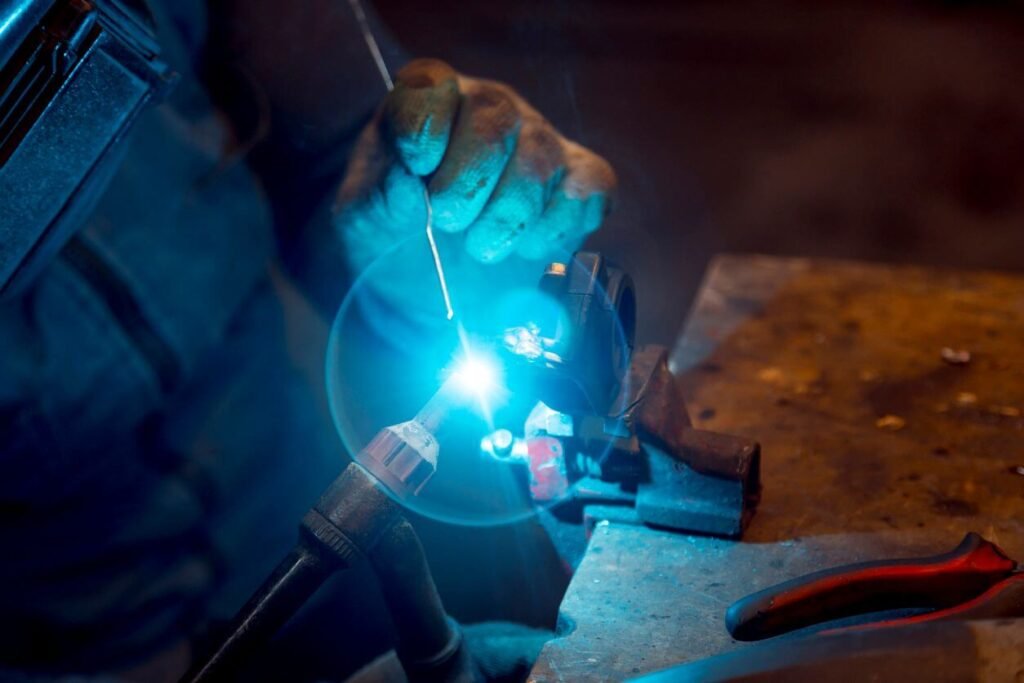
Not every casting defect means a part must be scrapped. For certain surface or near-surface defects, repair welding lets a part be saved without repeating the entire production cycle, as long as it follows the right procedure and applies to defect types that are actually allowed to be repaired.
When Weld Repair Is Allowed
Not every defect is suitable for weld repair. The decision depends on the defect type, location, and size, and on how critical the part is.
Defects generally repairable: small surface porosity, shallow inclusions, minor cold shut in non-critical areas, and cosmetic defects that do not affect structural function, as discussed in the articles on porosity and hot tearing and cold shut and misrun.
Defects generally NOT allowed to be weld-repaired, especially for safety-critical parts: major structural cracks, significant-volume porosity that weakens overall integrity, and defects in primary load-bearing areas without specific approval from a qualified engineer.
Specification-based decisions. Many industry standards (such as for oil and gas or aerospace components) set limits on the size and location of defects that may be repaired; beyond those limits, the part must be rejected entirely.
Common Welding Methods Used
Gas Tungsten Arc Welding (GTAW/TIG). The most common method for precision repair, because it gives good heat control and a clean weld, suitable for many metals including steel, aluminum, and copper alloys as discussed in non-ferrous metal casting.
Shielded Metal Arc Welding (SMAW). More often used for repairs on larger cast iron and cast steel parts, though heat control is less precise than TIG.
Metal Inert Gas (MIG/GMAW). Suitable for higher-volume repair work thanks to its speed, though precision control is somewhat lower than TIG.
Technical Challenges in Repair Welding
Microstructure difference between base metal and weld. The heat-affected zone during welding undergoes microstructural changes that can have different mechanical properties from the surrounding base metal, potentially creating a new weak point if not managed properly.
Cracking risk from thermal stress. Rapid heating and cooling during welding creates thermal stress, which can trigger new cracks, especially in susceptible materials such as high-carbon cast iron.
Filler metal composition match. Filler metal must be chosen to match the base metal composition to avoid a significant difference in mechanical properties or corrosion resistance after repair.
Need for preheat and post-weld heat treatment. Many alloys, especially cast steel and cast iron, need preheating before welding and heat treatment afterward to relieve residual stress and homogenize the microstructure of the repaired area.
Quality Control After Repair
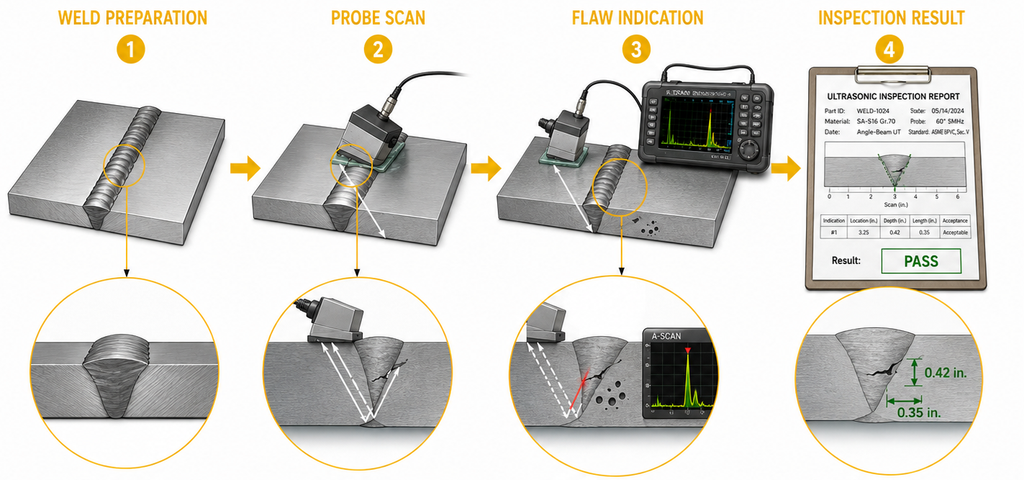
A weld repair without follow-up quality verification risks creating a new, hidden problem. Standard practice includes:
Visual and dimensional inspection to confirm the repaired area matches the original design geometry.
Non-destructive testing, such as liquid penetrant testing or ultrasonic testing, on the repaired area, as discussed in non-destructive testing (NDT) methods, to confirm no new defect remains.
Documented repair procedure (Weld Procedure Specification). For critical parts, the repair welding procedure must follow a validated written specification, including current, voltage, preheat, and filler parameters used.
Welder qualification. Operators performing repairs on critical parts generally must hold a welding qualification certification under applicable standards, not just informal experience.
The Economics of Repair vs Total Rejection
The decision to repair or reject a cast part is not purely technical, it is also economic. Parts with high material value and production time, especially expensive metals such as titanium alloy or superalloy in aerospace applications, create a strong incentive to repair rather than scrap, provided the repair procedure and quality verification meet the required standard. Conversely, for high-volume, low-cost parts, rejecting and recasting is often more economical than the time investment needed for manual repair.
Why This Skill Remains Relevant in the Age of Automation
Even as robotics and automation take over more production stages, repair welding still demands a high degree of human skill because of how much defects vary. Every repair is essentially unique, unlike repetitive production processes that are easier to automate. For foundries, investing in certified welder training remains a high-value core competency.


