We’ve covered the basics of rare earth elements in Rare Earth Elements 101 and Indonesia’s downstream potential in Indonesia’s Rare Earth Downstream Push. Now it’s time to tackle what has long been the toughest part of the rare earth industry: extraction and refining.
Unlike most metals, rare earth elements can’t simply be pulled straight out of their ore. It takes a complex, expensive chemical process and specialized technology to separate elements whose chemical properties are remarkably similar to one another.
Why Is Rare Earth Extraction So Complicated?
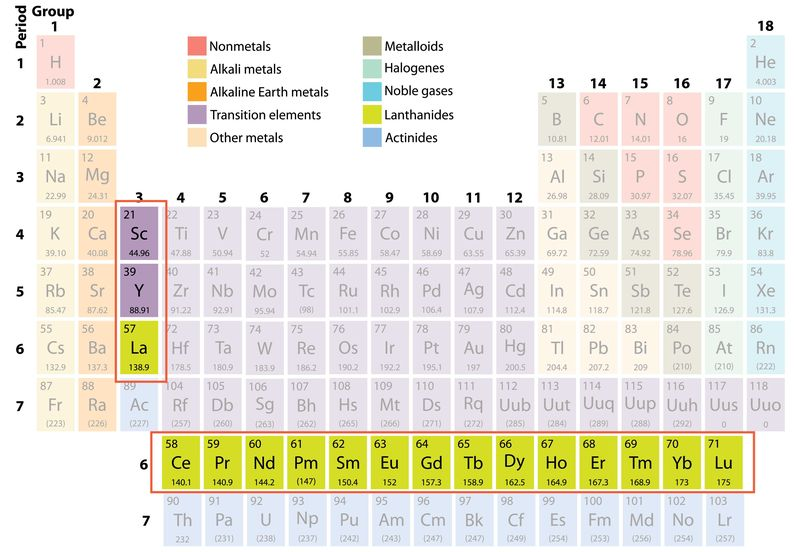
Rare earth elements are rarely found as a concentrated single element. They’re typically mixed in with primary minerals like monazite and xenotime, or occur as a byproduct of mining other metals such as tin and nickel. Because all 17 rare earth elements share very similar chemical and physical properties, separating them into pure elements requires a multi-stage chemical process far more complex than conventional metal extraction.
General Stages of Extraction and Refining
Broadly speaking, rare earth extraction and refining goes through the following stages:
1. Acid and Alkali Digestion
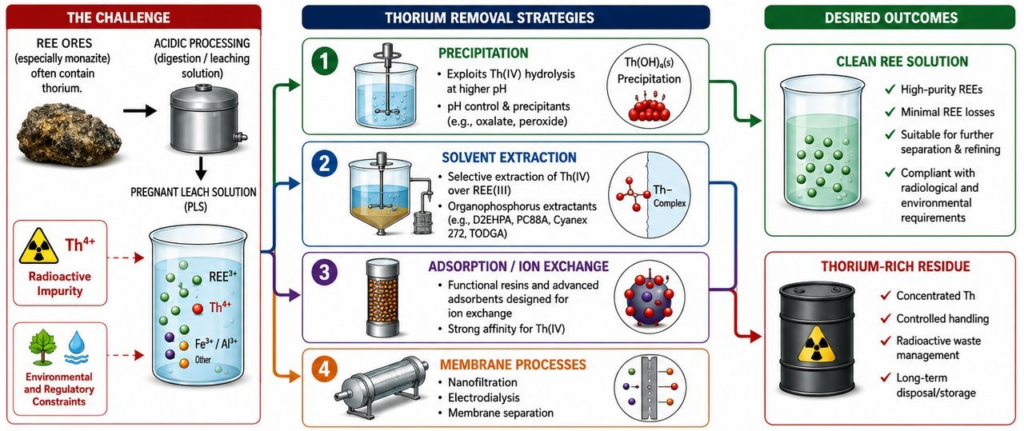
The initial stage typically involves a chemical process called acid digestion or alkali digestion. Minerals like monazite are reacted with a strong acid or base to separate the rare earth content from the primary mineral residue.
2. Leaching
The product of fusion or digestion is then leached using a solvent such as pure water to dissolve rare earth compounds, separating them from unwanted compounds like sodium phosphate. Laboratory studies show this leaching process can recover around 70% of rare earth content under optimal conditions, while impurities like iron and titanium are also recovered at varying rates.
3. Solvent Extraction
Once the rare earths are dissolved, the next stage separates each element one by one through solvent extraction. This method uses specific chemical extractants — such as D2EHPA and TOPO — that selectively bind to particular elements like yttrium, dysprosium, or gadolinium from the mixed solution, based on acidity levels and extractant concentrations optimized in the lab.
4. Solid Phase Extraction
As an alternative to solvent extraction, some researchers have developed solid phase extraction using ion-imprinted polymer materials as a selective trap for a single rare earth element. These polymers are molded so their cavities only “bind” to one specific element, such as scandium, producing a purer result without contamination from other rare earth elements.
Extraction Technology Challenges in Indonesia
While Indonesia is believed to hold considerable rare earth potential as a byproduct of nickel and tin mining, commercial-scale extraction capability remains the main obstacle. Extracting rare earth content from nickel can reportedly be done through two routes — metallurgical and hydrometallurgical technology — which have so far been focused mainly on supporting the battery supply chain and stainless steel production.
The head of Indonesia’s Nickel Industry Forum (FINI) has said rare earth extraction requires three stages of technology readiness: identification, mapping and testing, and extraction itself — and even the identification stage is currently constrained by limited testing equipment, since mineral exploration in Indonesia has historically focused on primary commodities like nickel, iron, and cobalt. This leaves Indonesia still far from being able to extract rare earths commercially and profitably in the near term.
Beyond the technology gap, governance issues are also drawing attention. Industry players in the mining sector note that the presence of rare earths in Indonesia has long been known, but clear regulation on how to manage them has yet to fully take shape.
Conclusion
Rare earth extraction and refining isn’t just a technical challenge confined to the laboratory — it’s also a major test of technology readiness and governance at both the industry and national level. For Indonesia, the path toward processing independence requires long-term investment across three fronts at once: identification and extraction technology, clear regulation, and collaboration between government and industry players.
Understanding this extraction process matters for anyone looking to grasp the rare earth industry as a whole — from its resource potential and processing complexity to its future downstream opportunities.