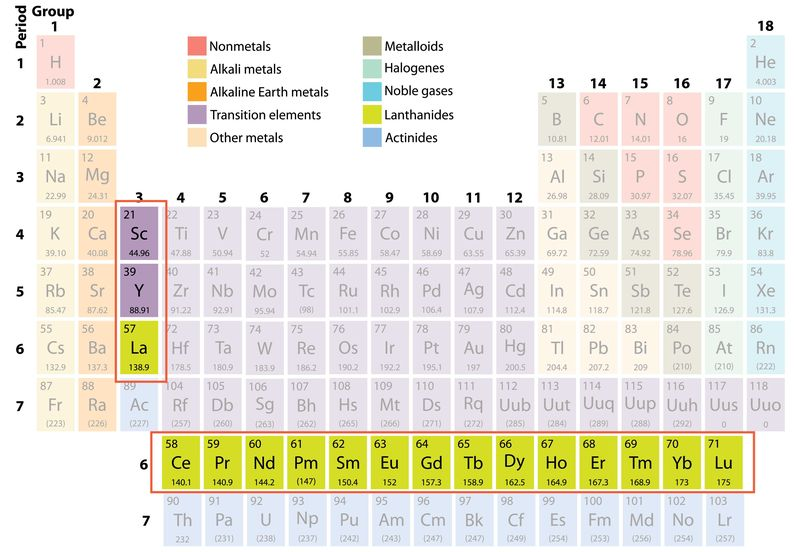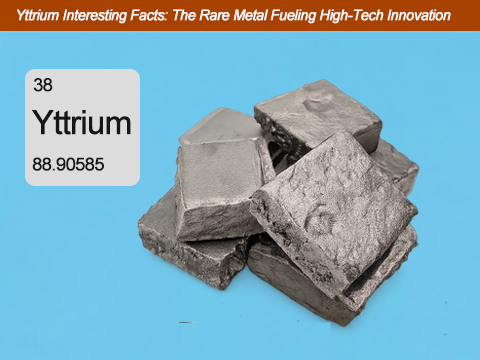
Amid the media’s dominant focus on neodymium and EV magnets, one rare earth element rarely gets the spotlight despite its broad role across high-tech industries: yttrium. With the symbol Y and atomic number 39, this element technically isn’t part of the lanthanide series, yet by convention it’s always grouped with rare earth elements — even falling into the HREE category due to its chemical similarity and tendency to be found alongside other HREEs in ore deposits.
Why Is Yttrium Classified as a Rare Earth Element?
Although yttrium sits outside the lanthanide series in atomic structure (group 3 of the periodic table, not the f-block), its chemical properties closely resemble light lanthanide elements thanks to comparable ion size and valence electron configuration. This similarity is precisely why yttrium is almost always found mixed with other rare earth elements in the same ore deposits, and is treated as part of the REE group in industrial and strategic mineral policy contexts.
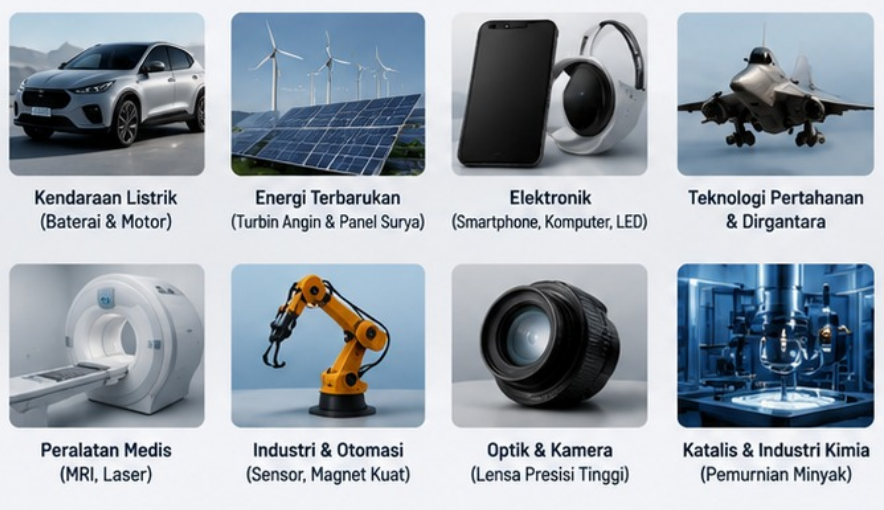
Key Applications of Yttrium in Modern Industry
Phosphors for displays and lighting. Yttrium oxide and yttrium-based phosphors are a key component in producing red color in older CRT displays as well as some modern LED display and fluorescent lighting technologies — delivering a brighter, more stable red than alternative phosphor materials.
High-temperature superconductors. Yttrium barium copper oxide (YBCO) is one of the most extensively researched and applied high-temperature superconductor materials, capable of achieving superconductivity at temperatures reachable with liquid nitrogen cooling (far more economical than the liquid helium required by conventional superconductors) — critical for applications like superconducting power transmission cables and high-performance MRI magnets.
Stabilized zirconia for advanced ceramics. Yttrium-stabilized zirconia (YSZ) is a ceramic material with exceptional thermal and mechanical resistance, widely used as a thermal barrier coating on gas turbine and jet engine components operating at extreme temperatures.
Precision optics and lasers. Yttrium aluminum garnet (YAG), especially when doped with neodymium, forms the core material of Nd:YAG lasers widely used in industrial applications (precision cutting and welding), medicine (laser surgery), and scientific research.
High-performance structural alloys. Adding a small amount of yttrium to certain magnesium and aluminum alloys has proven to improve high-temperature oxidation resistance and refine grain structure — relevant to principles also discussed in nanostructured materials for metal grain refinement.
How Yttrium’s Market Differs from Neodymium’s
Unlike neodymium, whose demand is heavily concentrated in a single dominant application (permanent magnets), demand for yttrium is far more diversified across high-tech applications — from lighting and superconductors to ceramics and laser optics. This application diversity creates demand dynamics somewhat different from the REE price and market pattern dominated by the EV narrative.
Implication for demand stability: this application diversity potentially gives yttrium a relatively more stable demand profile compared to elements heavily dependent on a single sector — though it still faces the same supply risks tied to global production and refining concentration as other rare earth elements.
Extraction and Refining Challenges for Yttrium
Like other HREEs, extracting and refining yttrium faces technical challenges similar to those discussed in rare earth separation technology in general — its chemical similarity to other heavy rare earth elements means achieving high-purity yttrium requires the same complex, expensive multi-stage solvent extraction process.
Why Yttrium Deserves More Attention
The case of yttrium illustrates well why public narratives about rare earth elements that focus too heavily on EV magnets can mislead broader understanding. “Less glamorous” elements like yttrium form the backbone of numerous advanced technologies rarely recognized by the general public — from the displays we watch daily to cutting-edge superconductor technology shaping the future of energy transmission and medical imaging. Understanding this diversity of applications matters for anyone analyzing strategic mineral policy comprehensively, rather than through the narrow lens of the automotive industry alone.