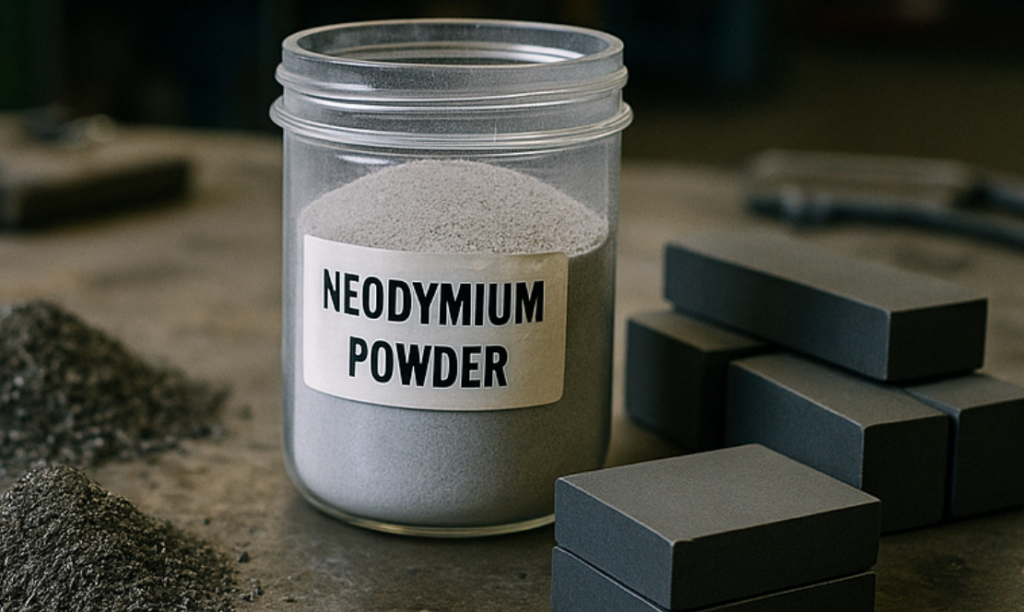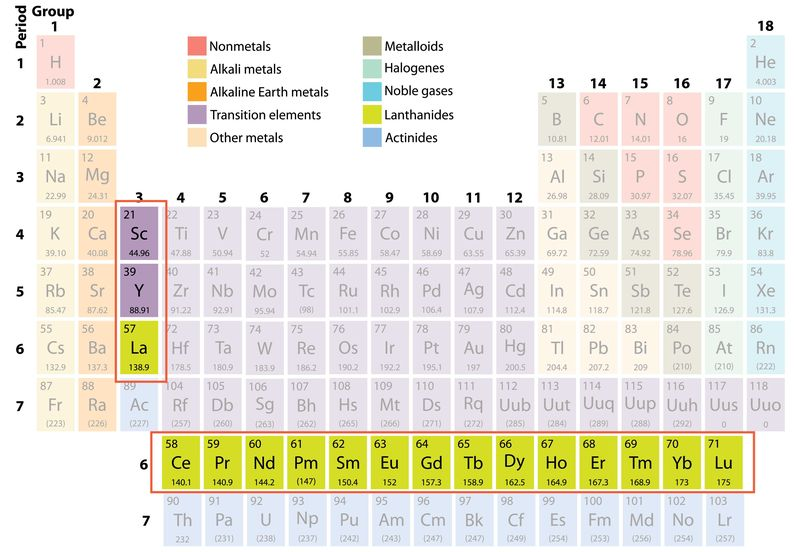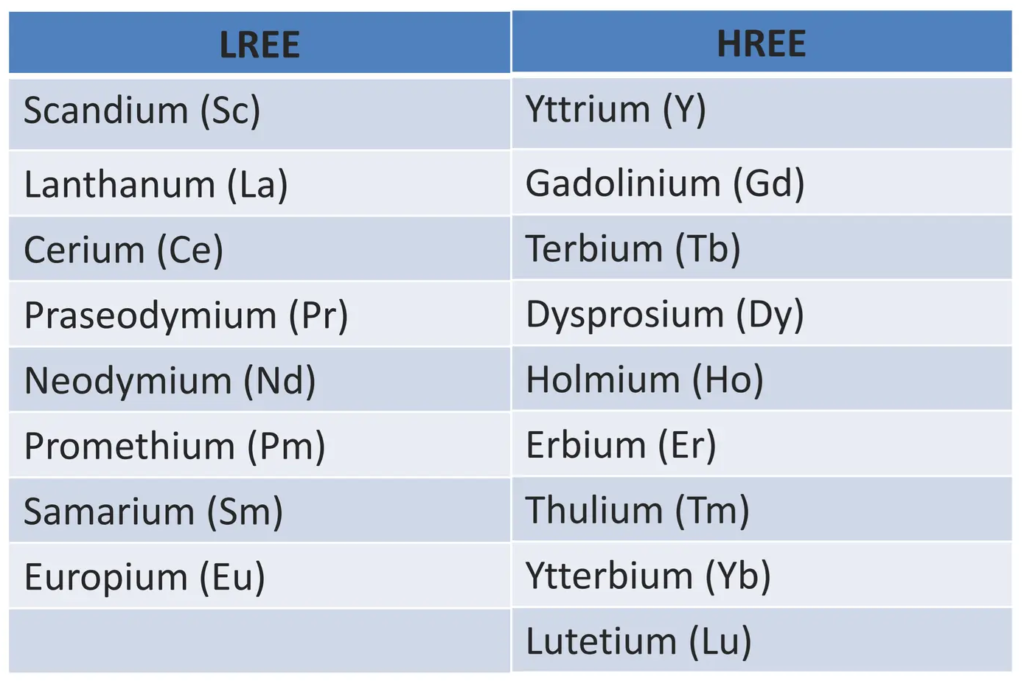
One of the most common misconceptions about rare earth elements is treating them as a single, uniform group of materials. In reality, as briefly touched on in Rare Earth Elements 101, the 17 elements in this group split into two categories with very different geological characteristics, abundance levels, and economic value: Light Rare Earth Elements (LREE) and Heavy Rare Earth Elements (HREE).
What Distinguishes LREE from HREE?
This classification is based on the atomic number of elements within the lanthanide series on the periodic table:
Light Rare Earth Elements (LREE) include elements with lower atomic numbers: lanthanum, cerium, praseodymium, neodymium, promethium, and samarium.
Heavy Rare Earth Elements (HREE) include elements with higher atomic numbers: europium, gadolinium, terbium, dysprosium, holmium, erbium, thulium, ytterbium, lutetium, plus yttrium, which is conventionally grouped with HREE despite having a different atomic number from the lanthanide series proper.
This difference in atomic number isn’t merely academic classification — it correlates directly with differences in chemical properties, natural abundance, and, most importantly for industry, the difficulty and cost of extraction and refining.
Abundance: Why HREE Is Far Scarcer
Despite both being labeled “rare earths,” the abundance levels of LREE and HREE in the Earth’s crust are highly imbalanced. LREE such as cerium and lanthanum are actually relatively abundant — more abundant, in fact, than some common industrial metals like tin. In contrast, HREE such as dysprosium and terbium are genuinely scarce geologically, and are often found only in very low concentrations mixed with LREE elements within the same ore deposits — making the extraction and refining process for HREE far more complex and expensive.
Differences in Industrial Applications
LREE in industrial applications:
- Cerium — oil refining catalysts, glass polishing, catalytic converters
- Lanthanum — nickel-metal hydride batteries, catalysts
- Neodymium and praseodymium — the core components of NdFeB permanent magnets used in EV motors and wind turbines
HREE in industrial applications:
- Dysprosium and terbium — added in small quantities to NdFeB magnets to improve resistance to demagnetization at high temperatures, critical for EV motors operating under hot conditions
- Yttrium and europium — phosphors for displays and LED lighting
- Gadolinium — MRI contrast agents and other medical applications
Interestingly, despite being needed in much smaller quantities than neodymium in permanent magnet formulations, dysprosium and terbium are the elements that raise the most supply concerns, due to their more extreme scarcity and production concentration compared to LREE.
Price Dynamics: Why HREE Is Far More Expensive
This difference in abundance and refining complexity translates directly into market pricing. HREE such as terbium and dysprosium have historically traded at per-kilogram prices far higher than LREE like cerium or lanthanum — sometimes by a factor of dozens. This dynamic is a key part of the complexity discussed in the broader rare earth price and market analysis .
Strategic Implications: Why the LREE-HREE Ratio Matters for Policy
Many rare earth ore deposits naturally contain LREE and HREE in a certain ratio — and unfortunately, this ratio is often heavily skewed toward LREE. This creates a strategic challenge: a country or mining company might produce REEs in large volumes, but if most of it is lower-priced LREE, the economic value and strategic significance differ substantially from a scenario where significant HREE output is also achieved.
This is one reason why REE downstream projects in Indonesia need to consider the LREE-HREE composition of domestic ore sources — including potential recovery from tin and nickel mining tailings — from the planning stage onward, rather than simply calculating total REE volume without analyzing the real economic value based on specific elemental composition.
Why This Distinction Matters
Understanding the LREE-HREE distinction helps clear up much of the oversimplification found in public discussions about a “rare earth crisis” — the reality is far more nuanced. The supply scarcity that genuinely raises strategic concern is concentrated in a handful of specific HREE elements, not evenly distributed across all 17 rare earth elements. This nuance matters for anyone analyzing strategic mineral policy, mining investment decisions, or supply chain planning for industries dependent on this material.