
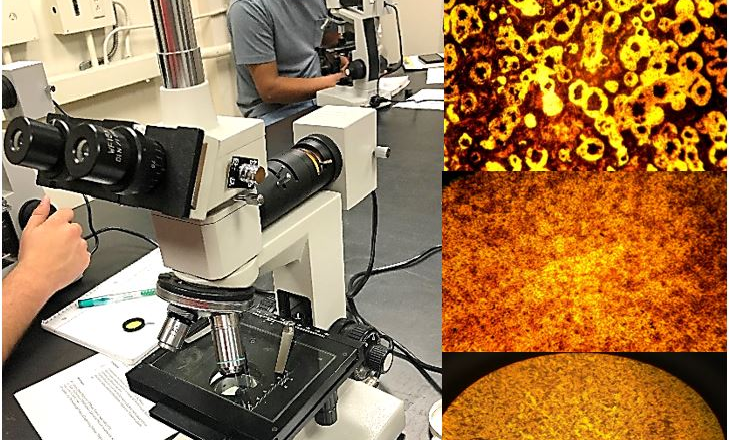
For thousands of years, nearly all alloys were designed the same way: take one main metal and add small amounts of others. Steel is based on iron, aluminum alloys on aluminum, brass on copper. Since the early 2000s, researchers have tried a completely different approach: mixing five or more elements in nearly equal proportions. The result is a group of materials called high-entropy alloys (HEAs), one of the most active areas of metallurgical research today.
What Is a High-Entropy Alloy?
HEAs are generally defined as alloys made of five or more principal elements, each at roughly 5 to 35 atomic percent. No single element dominates. The best-known example is the Cantor alloy, an equal mix of cobalt, chromium, iron, manganese, and nickel.
Early intuition suggested that so many elements would form many brittle intermetallic compounds. Surprisingly, at certain compositions, these elements instead form a single simple solid-solution phase, such as face-centered cubic (FCC) or body-centered cubic (BCC).
The Four Core Effects
Researchers usually explain HEA behavior through four effects:
High-entropy effect. Many elements in equal proportions raise configurational entropy, which helps stabilize solid-solution phases, especially at high temperature.
Severe lattice distortion. Atoms of different sizes distort the crystal lattice, making dislocations harder to move and the material stronger.
Sluggish diffusion. Atomic movement through an irregular lattice tends to be slower, helping keep the microstructure stable at high temperature.
Cocktail effect. The final properties result from the combined elements, sometimes producing properties none of the elements have alone.
Some scientists question how much each effect actually contributes, and that debate continues. But experimental data show that a number of HEAs do have attractive combinations of properties.
Promising Properties
Toughness at very low temperatures. The Cantor alloy is known for very high fracture toughness that actually improves at cryogenic temperatures, making it a candidate for liquefied gas tanks and extreme-temperature applications.
High-temperature resistance. Refractory HEAs made from high-melting elements such as niobium, molybdenum, tantalum, and tungsten are being studied for turbine parts and applications beyond the limits of nickel superalloys.
Wear and corrosion resistance. Some compositions show good wear and corrosion resistance and are being studied as coatings.
Challenges of Producing HEAs by Casting
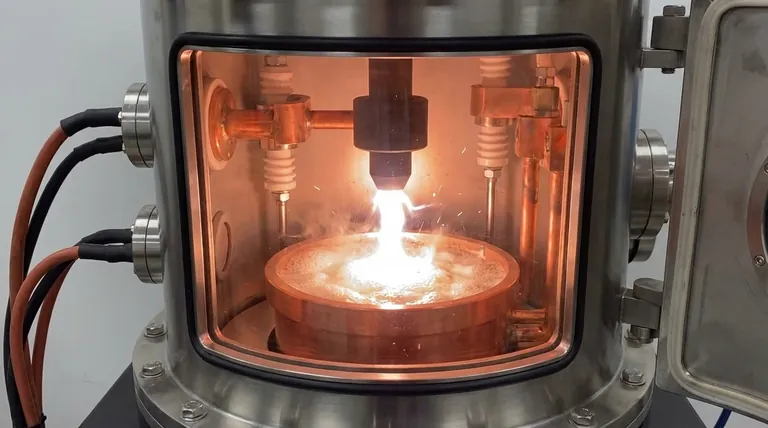
In the lab, HEAs are usually made in small batches by arc melting under argon, then remelted several times for homogeneity. Scaling up through casting faces several hurdles:
Segregation. Elements with different melting points solidify at different times, so dendrites and interdendritic regions have different compositions. In large, slowly cooled castings this segregation worsens and usually requires long homogenization treatments at high temperature.
Wide freezing range. Many HEAs solidify over a wide temperature range, increasing the risk of shrinkage porosity and hot tearing.
Reactivity and metal cleanliness. Elements such as chromium, aluminum, and refractory metals oxidize easily, so melting often needs vacuum or protective atmosphere to avoid oxide inclusions.
Raw material cost. Cobalt, nickel, and refractory elements are expensive. This is pushing research toward HEAs based on cheaper elements, for example by reducing or eliminating cobalt.
Eutectic HEAs: Designed to Be Castable
One answer to the casting problem is the eutectic high-entropy alloy (EHEA). These alloys are designed with a eutectic composition, so they solidify at a single temperature, much like the famously castable eutectic aluminum-silicon alloys. The result is good fluidity, less segregation, and a fine lamellar two-phase microstructure that combines strength and ductility. A frequently studied example is based on aluminum, cobalt, chromium, iron, and nickel. This approach shows that castability can be a design criterion from the very start.
The Role of Computation and Additive Manufacturing
The number of possible HEA compositions is enormous, making one-by-one testing impossible. HEA research therefore relies heavily on thermodynamic calculations (CALPHAD) and data-driven, machine learning alloy design to screen candidates. On the production side, additive manufacturing is an attractive route, because its very fast cooling rates can suppress the segregation that is hard to avoid in conventional casting.
Still a Long Way to Industry
HEAs have not yet replaced conventional alloys at scale. Cost, long-term fatigue and creep data, and immature material standards remain barriers. But HEAs have changed how metallurgists think about alloy design: the “center” of the phase diagram, once rarely explored, turns out to hold many possibilities. For the casting industry, the development of eutectic and low-cost HEAs is worth watching over the next few years.


