Trains carry heavy loads, run at high speed, and operate for decades on tight schedules. Many of their critical components are made by casting, because the process can produce thick, complex shapes as a single piece. This case study adds to our series on automotive aerospace, and shipbuilding, focusing on a sector with exceptionally high fatigue demands.
Main Cast Components on Trains and Track
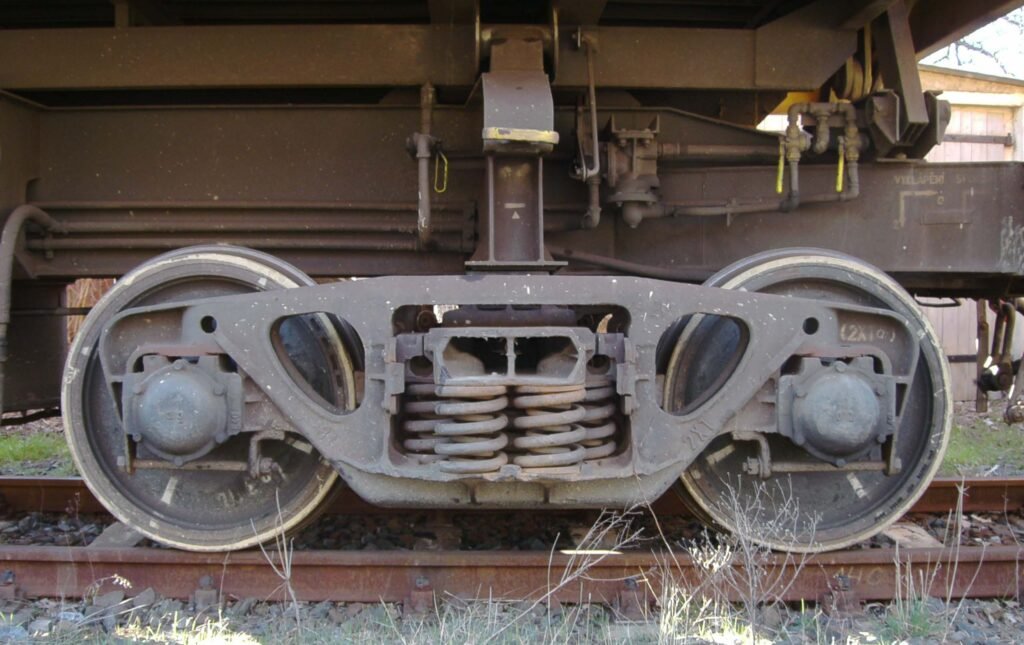
Bogie side frames and bolsters. The bogie is the wheeled frame beneath a car that supports the body. On many freight cars, the side frames and bolster are made of cast steel as single pieces. Casting allows stiff, hollow, relatively light shapes without many welded joints, which could become fatigue crack starting points.
Couplers and knuckles. Couplers carry the tensile and compressive forces of the whole train. They are usually made of alloy cast steel hardened by heat treatment, because they must be strong and tough against shock loads during braking or coupling.
Wheels. Railway wheels are forged or cast depending on the standard and region. Cast wheels are produced with special processes that tightly control solidification, after which the tread is hardened to resist wear from rail contact.
Crossings made of high-manganese steel. The crossing in a turnout takes an impact every time a wheel passes. It is often made of high-manganese (Hadfield) steel, which has a unique property: its surface work-hardens under repeated impact while the core stays tough.
Brake blocks and other parts. Cast iron brake blocks are still used on some fleets, although many have switched to composites. Gearbox housings, axle bearing housings, and various brackets are also often made of ductile iron or cast steel.
Key Technical Challenges
Fatigue from repeated loading. Rail components see millions of load cycles in their service life. Small defects such as porosity or hot tears in highly stressed areas can grow into fatigue cracks. Clean metal and sound casting structure in critical zones are therefore essential.
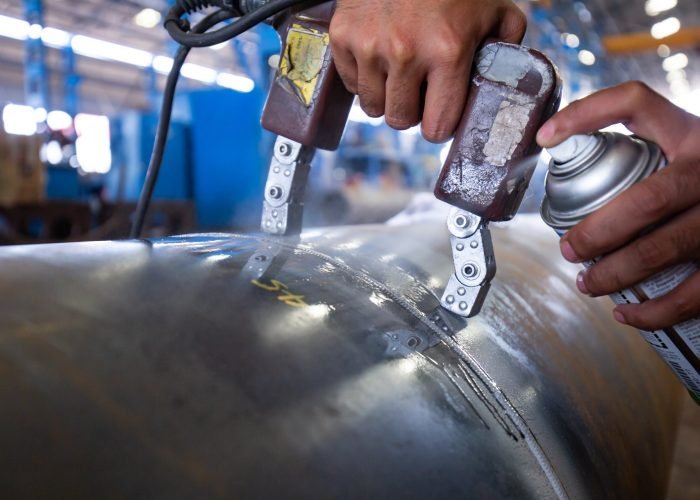
Strict inspection. Components such as bogie frames and couplers are usually checked with non-destructive testing, especially magnetic particle testing for surface cracks and radiography or ultrasonics for internal defects. Railway standards set allowable defect limits and specify which areas may be fixed by repair welding.
Consistent heat treatment. Cast steel for rail parts almost always undergoes normalizing or quench and temper so the microstructure is uniform and toughness meets requirements, including at low temperatures. The principles are covered in our heat treatment.
Size and weight. Bogie frames are large, with varying wall thickness. Gating and risering must ensure every thick section receives enough molten metal as it solidifies, which is why digital simulation is widely used to predict shrinkage before tooling is built.
Certification and Traceability
The railway industry places heavy emphasis on traceability. Each critical part typically carries a heat number and serial number linking it to records of chemical composition, heat treatment, and inspection results. Supplier foundries usually must pass audits and certification by operators or railway associations before they can supply, similar to the requirements in the oil and gas sector.
Opportunities for Domestic Foundries
Urban rail projects such as MRT and LRT, high-speed rail, and rail freight in Indonesia are increasing demand for rolling stock and track components. Local content (TKDN) policy opens opportunities for local foundries to supply parts such as bogie components, couplers, crossings, and maintenance spares. But these opportunities require investment in process control, heat treatment, NDT capability, and documented quality systems, because safety standards in this sector leave no room for compromise.
Lessons from the Railway Sector
Rail shows that casting remains the method of choice for large structural components that must survive decades of repeated loading. The key is not only the casting method but an unbroken quality control chain: from material selection and heat treatment to inspection and documentation. Foundries that meet these demands build capabilities that also apply to other heavy sectors, such as mining equipment .