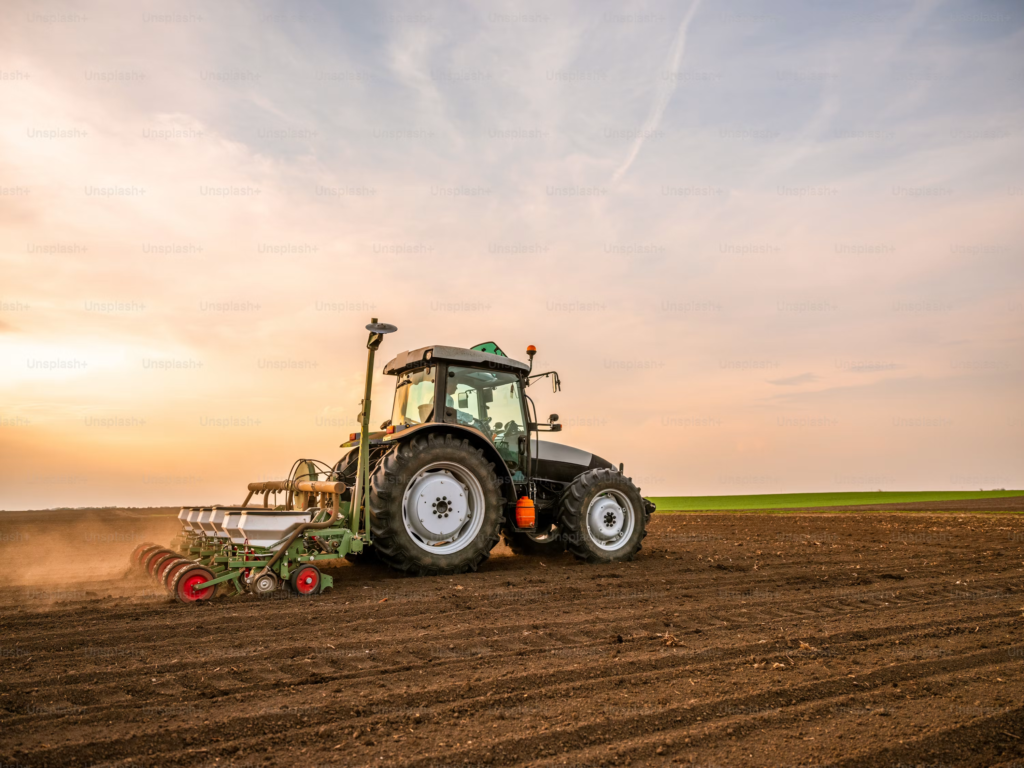
Adding to the case studies on mining heavy equipment and other sectors, agricultural equipment has a unique character: components must resist abrasion from constant soil contact, yet the final selling price to farmers demands production costs far more constrained than industrial mining heavy equipment.
Key Cast Components in Agricultural Equipment
Plow blades and tillage components. Parts in direct contact with soil, plow blades, discs, and rotary blades, face constant abrasion and need wear-resistant material, often alloy steel or white cast iron with special heat treatment to harden the working surface.
Tractor transmission and gearbox components. Tractor gearbox housings and transmission components generally use cast iron or cast steel, chosen to withstand high torque loads when the tractor pulls heavy implements over uneven terrain.
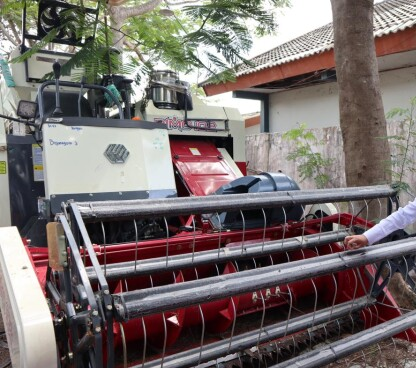
Combine harvester components. Various structural components and cutting mechanisms on combine harvesters use a combination of cast iron for structural parts and wear-resistant steel for parts in direct contact with crops and soil.
Irrigation system fittings and components. Pipe joints and valves for large-scale agricultural irrigation systems use cast iron or copper alloys, similar to the principle discussed in non-ferrous metal casting for applications needing corrosion resistance against water and agricultural chemicals.
Wear Resistance Challenges in Soil Environments
Variable soil abrasion. Unlike abrasion in mining heavy equipment, which faces hard rock, agricultural soil abrasion varies more depending on soil type (sandy, clay, rocky), requiring material flexible enough to handle field conditions that differ from region to region.
Hardness-toughness trade-off. A plow blade that is too hard risks sudden fracture when it strikes a hidden rock in the soil, while one that is too soft wears quickly and needs frequent replacement, requiring a balance of mechanical properties similar to the principle discussed for heat treatment of high-manganese steel for heavy equipment.
Corrosion from soil moisture and chemical fertilizer. Components exposed to damp soil and chemical fertilizer residue face corrosion risk that must be considered, especially for parts not routinely cleaned after use.
Cost Pressure as the Main Design Consideration
Unlike the aerospace or oil and gas sectors, which can absorb high costs for maximum reliability, agricultural equipment is very sensitive to final selling price because farmers’ purchasing power, especially in developing countries, limits how much can be charged for replacement components.
Implication for material and process selection. Sand casting remains the dominant method for most agricultural components because of its lower tooling cost compared with die casting, suited to the medium production volumes typical of this industry.
Availability of replacement parts. Since wear components like plow blades need periodic replacement, design that allows quick replacement in the field, without special equipment, is an important consideration affecting component geometry and mounting systems.
Opportunities for Local Foundries
For Indonesia as an agrarian country, the need for cast components in agricultural equipment creates a significant domestic market opportunity, especially for replacement parts routinely needed by small and medium-scale farmers. Local foundries that understand the soil conditions and specific equipment usage patterns in a particular region could potentially offer products better suited to local needs than generic imported components, while supporting the resilience of the domestic agricultural parts supply chain.
Lessons from a Medium-Volume, Cost-Constrained Sector
This agricultural equipment case study shows a pattern similar to household appliances in terms of cost pressure, but with wear resistance demands closer in character to mining heavy equipment. This combination requires foundries to balance two often-conflicting priorities: adequate wear resistance while remaining affordable for the target end market.