
The metal casting industry, thousands of years old, is being transformed by advances in digital technology and additive manufacturing. A process that once relied on manual skill and trial and error is now increasingly supported by high-precision technology that speeds up production, reduces waste, and improves casting quality.
In our earlier article on metal casting basics, we covered conventional methods such as sand casting and die casting. This time, let’s explore the technological innovations that are changing the face of modern metal casting.
3D Sand Printing: Sand Molds Without a Physical Pattern
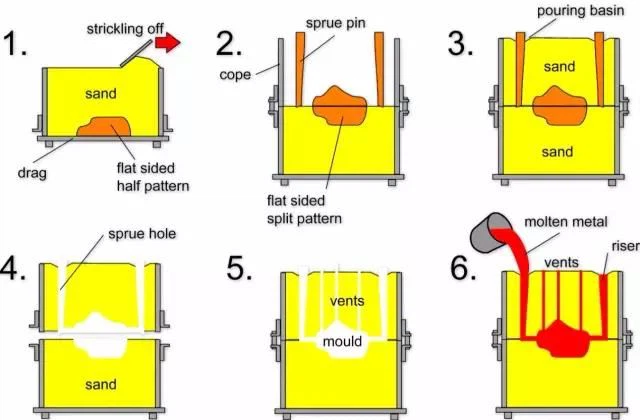
One of the most significant breakthroughs of the past decade is 3D sand printing, which prints sand molds using binder jetting 3D printers. Unlike conventional sand casting, which needs a physical pattern to form the mold, this technology prints the sand mold directly from a digital design (CAD file).
Its main advantages include:
- No physical pattern needed, saving the cost and time of pattern making, especially for low-volume components or complex designs.
- High design flexibility, allowing complex geometries that are difficult or even impossible to make with conventional sand molds.
- Shorter production times, going from digital design to a mold ready for pouring in hours rather than weeks.
Digital Simulation and Casting Simulation Software
Before molten metal is actually poured into a mold, engineers can now predict the outcome through digital simulation. Mold filling simulation and solidification simulation software let production teams visualize how the metal will flow and where defects such as porosity or shrinkage are likely to appear, before any physical process takes place.
The benefits of simulation include:
- Fewer expensive and time-consuming physical trial castings.
- Identifying the optimal gating system and riser design from the planning stage.
- A higher rate of success on the first production attempt (first-time-right).
Automation and Robotics in Casting
Many modern foundries now integrate robotic arms for repetitive and high-risk tasks, such as pouring molten metal, shakeout, and finishing processes like grinding and cutting off the gating system. This automation not only improves product consistency but also improves workplace safety by reducing workers’ exposure to high temperatures and hazardous materials.
Real-Time Monitoring with Sensors and IoT
Applying the Internet of Things (IoT) in casting allows process conditions to be monitored in real time, from melting furnace temperature and pouring speed to the moisture level of the mold sand. This data is collected and analyzed to detect anomalies early, so potential product defects can be prevented before they happen on a large scale. This is part of the wider Industry 4.0 shift in foundries.
New Materials and Lightweight Alloys
Materials research also keeps advancing, especially in developing lightweight yet strong alloys, such as new-generation aluminum-magnesium alloys widely used in the automotive and aerospace industries to reduce vehicle weight without sacrificing structural strength.
Challenges of Adopting New Technology
Despite their many promised advantages, adopting these technologies is not without challenges, especially for small and medium-sized foundries. The upfront investment in 3D sand printers or advanced simulation software is still high, while the need for skilled workers who understand digital technology is another obstacle in many regions.
Conclusion
Technological developments in metal casting show that this ancient manufacturing process keeps adapting to the digital era. From sand molds printed directly from digital files and simulations that predict results before physical production, to robotic automation, all of these innovations lead to one goal: faster, more precise, and more efficient production.
For industry players, understanding these technology trends is important for staying competitive amid increasingly tough global competition. METALURGIKA.COM will keep following the latest research and technology in metallurgy. Stay tuned for in-depth insights on these topics.


