Amid surging demand for electric vehicles, wind turbines, and advanced electronics, rare earth element (REE) prices have become one of the most closely watched indicators for manufacturers and commodity investors alike. Yet unlike most industrial metals such as copper or aluminum, the rare earth market has structural quirks that make price movements notoriously difficult to predict.
Why Are Rare Earth Prices So Volatile?
Several structural factors make REE pricing far more erratic than typical industrial metals:
1. Heavily concentrated production. A single country dominates both raw production and, more importantly, global refining capacity. This imbalance makes prices extremely sensitive to export policy shifts, production quotas, or geopolitical friction involving that one country — a dynamic explored in depth in Rare Earth Supply Chain Geopolitics.
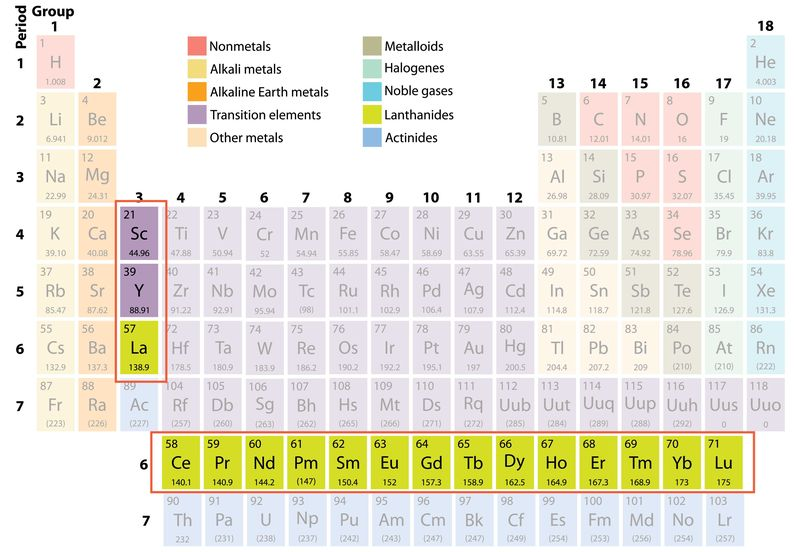
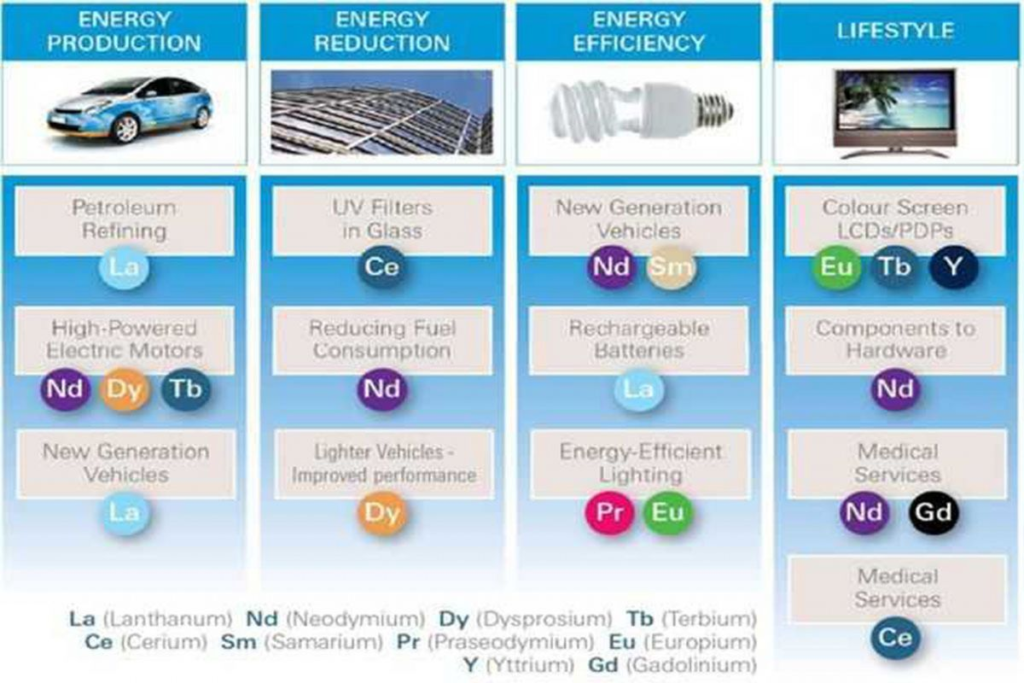
2. Significant variation across elements. “Rare earth elements” actually covers 17 distinct elements with very different market dynamics, as outlined in Rare Earth Elements 101. Neodymium and praseodymium (used in permanent magnets) follow a very different price trajectory than heavier, scarcer elements like dysprosium and terbium, or lighter, more abundant ones like cerium and lanthanum.
3. A relatively small, opaque market. Unlike copper, which trades on major exchanges (LME, COMEX) with transparent pricing, most REE transactions happen through direct bilateral contracts between producers and industrial buyers — making price discovery slower and more prone to speculation.
4. Demand concentrated in a few key applications. The surge in neodymium-iron-boron (NdFeB) magnet demand for EV motors and wind turbines — a trend detailed in Rare Earth Magnets and the EV Supply Chain — creates sharp demand pressure on specific elements while others remain relatively stable.
Price Trends: From Surges to Sharp Corrections
Over the past several years, the REE market has gone through fairly extreme cycles. Sharp price surges have occurred alongside expectations of an EV demand boom, compounded by supply concerns from export restrictions imposed by the dominant producing country. Yet prices are also prone to sharp corrections when:
- New mining projects outside the dominant producer begin commercial output
- EV motor technology shifts toward designs that reduce reliance on permanent magnets (such as induction motors)
- Export policies are suddenly relaxed
This boom-and-bust pattern makes long-term investment planning in REE mining and refining extremely risky — new mining projects take years to reach commercial production, while prices can shift drastically within months.
Key Demand Drivers Going Forward
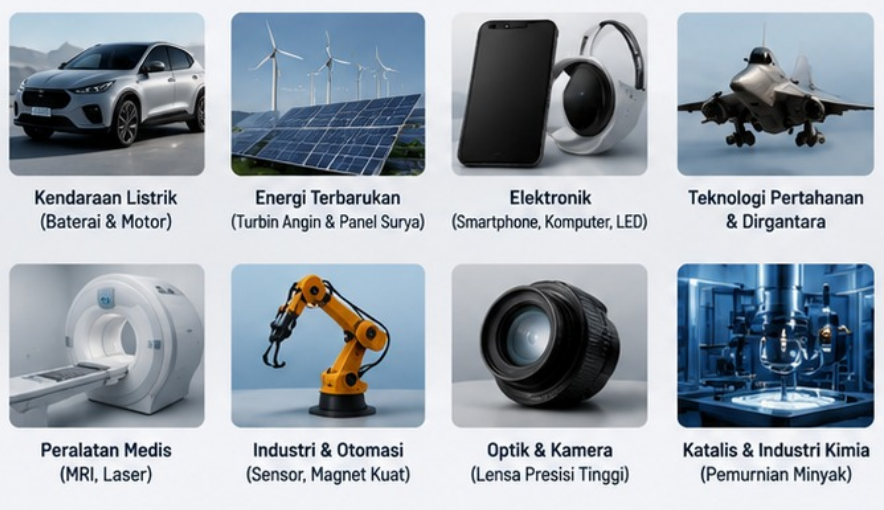
Electric vehicles. Permanent magnet motors remain the dominant choice for mid-to-premium EVs due to their efficiency and power density, though some manufacturers are exploring alternatives to reduce dependence on heavy REEs like dysprosium.
Renewable energy. Offshore wind turbines in particular rely heavily on large-capacity permanent magnet generators, given the minimal maintenance requirements at hard-to-reach installation sites.
Electronics and defense. Demand for REEs in semiconductors, missile guidance systems, and other defense equipment remains relatively stable but highly politically sensitive, as many nations classify REEs as strategic minerals critical to national security.
Supply Diversification: A Long-Term Path to Stability
Awareness of supply concentration risk is pushing various countries — including Indonesia, with its REE potential from tin and nickel mining tailings, as explored in Indonesia’s Rare Earth Downstream Push — to develop domestic extraction and refining capacity. Several strategies currently underway globally include:
- Government and private investment in new REE mining projects outside the dominant producing nation, closely tied to the extraction and refining challenges these projects must overcome
- Development of REE recycling technology from e-waste and used magnets, as detailed in Recycling Rare Earth Elements from E-Waste
- Research into alternative materials that reduce the need for heavy REEs in permanent magnet design
While these diversification efforts are promising, realizing them takes considerable time — from exploration and feasibility studies to building capital-intensive refining facilities that face significant environmental hurdles, given that REE refining generates low-level radioactive waste requiring strict management.
What This Means for Indonesian Industry
For Indonesian manufacturers and material researchers, these global REE price dynamics cut both ways. On one hand, price volatility poses a challenge for industries dependent on imported permanent magnets or REE-based electronic components. On the other hand, Indonesia’s potential REE reserves within tin and nickel mining tailings open new downstream opportunities — provided they are backed by adequate investment in extraction-refining technology and consistent long-term policy.
Understanding this price and market dynamic matters not just for commodity investors, but also for engineers and industrial planners who need to anticipate raw material cost fluctuations in long-term product design decisions.