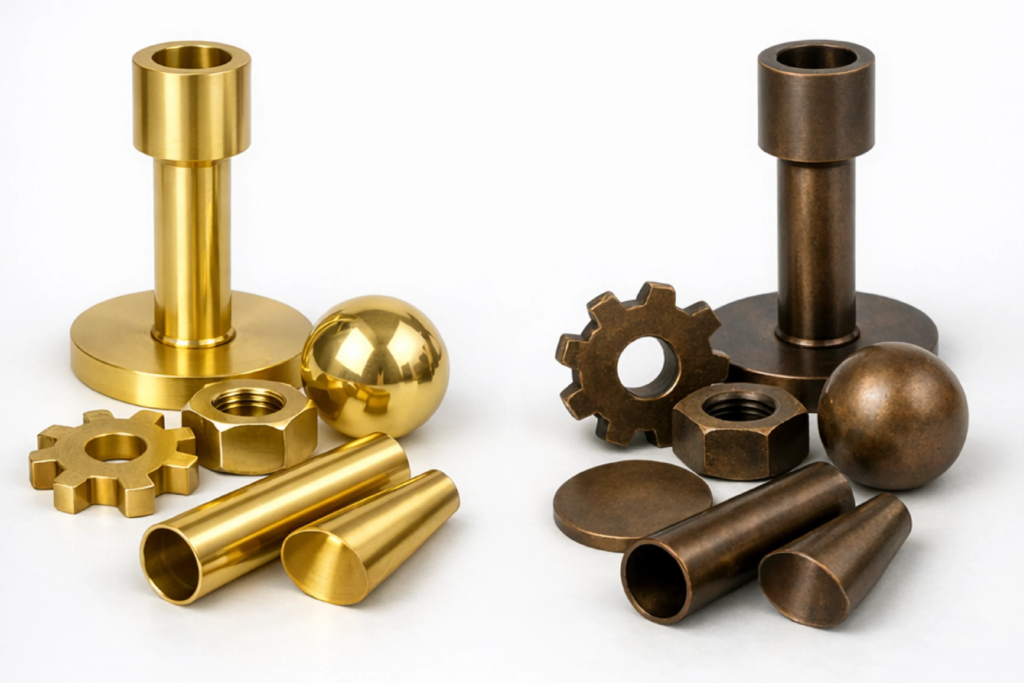
A part fresh out of the mold, whether from sand casting, die casting, or investment casting, is not ready to use yet. Gating, risers, flash, and rough surfaces still need to be removed through a series of finishing processes before the part is ready to ship to a customer or be assembled into a final product.
Fettling: Removing Mold Residue
Fettling is the first and most basic stage of finishing a casting. It removes leftover material attached to the cast part, such as gating, risers, flash (excess metal at the mold parting line), and core sand still stuck inside internal cavities.
Common fettling methods:
- Manual or mechanical cutting: using saws, cut-off grinders, or plasma cutters to separate gating and risers from the main part
- Chipping: removing thin flash with a pneumatic chisel
- Grinding: smoothing the cut marks left by gating and risers so they sit flush with the part surface
This process depends heavily on the gating and riser system design from the start. A good design minimizes the area that needs fettling, cutting finishing time and cost significantly.
Shot Blasting: Cleaning the Whole Surface
Shot blasting fires abrasive particles at high speed (usually small steel balls, known as steel shot, or special sand) at the part surface using a centrifugal wheel or compressed air. It removes adhering mold sand and oxide scale and leaves a smoother, more uniform surface.
Benefits of shot blasting:
- Removes mold sand stuck to the surface and internal cavities of the part, especially on sand castings
- Produces a uniform surface texture that improves appearance and prepares the surface for later coating or painting
- Gives a light shot peening effect that can slightly improve surface fatigue resistance through compressive residual stress
- Helps early visual inspection by exposing surface defects, such as fine cracks, that sand residue may have hidden
- Machine types, media, and cleanliness grades are covered in our guide to shot blasting.
Machining: Reaching Precise Dimensional Tolerances
However good the mold, a casting generally has looser dimensional tolerances than the final part requires, especially on functional surfaces such as bolt holes, bearing surfaces, or precision mating areas. This is where machining comes in.
Common machining operations on castings:
- Turning: for precise cylindrical surfaces, such as on centrifugal castings
- Milling: for precise flat surfaces and contours
- Drilling and boring: for bolt holes and other precision holes
- Precision grinding: for surfaces that need very tight tolerances and a fine surface finish
The machining allowance (how much extra material is deliberately left for machining) must be planned at the mold design stage. Too thin an allowance risks a defective part after machining because the uneven cast surface runs too deep, while too thick an allowance wastes material and machining time.
Additional Finishing Depending on the Application
Heat treatment. For parts that need specific mechanical properties, heat treatment such as annealing or normalizing is often done after fettling but before final precision machining, to relieve residual stress from solidification.
Surface coating. Galvanizing, powder coating, or protective paint is applied to parts that need extra corrosion protection, especially for outdoor use.
Final quality inspection. Before a part is cleared for shipping, final dimensional and visual inspection is carried out, sometimes combined with non-destructive testing for critical parts that must be guaranteed free of internal defects.
Why Finishing Should Be Planned from the Start
A common mistake in the casting industry is treating finishing as something to “deal with later” after the part is cast. In reality, early design decisions, such as gating location, machining allowance, and part orientation in the mold, strongly affect how much finishing is needed and how difficult it is. Good planning at the design stage can cut finishing costs significantly and reduce the risk of defects only being found at the end of production, after time and material have already been spent.
Related Articles
- Non-Destructive Testing (NDT) Methods for Detecting Defects in Metal Castings
- Understanding Heat Treatment: Processes, Types, and Their Effect on Metal Properties
- Other Metal Casting Methods: Centrifugal, Continuous, and Lost Foam Casting
- Shot Blasting: Process, Machine Types, Media, and Cleanliness Standards