
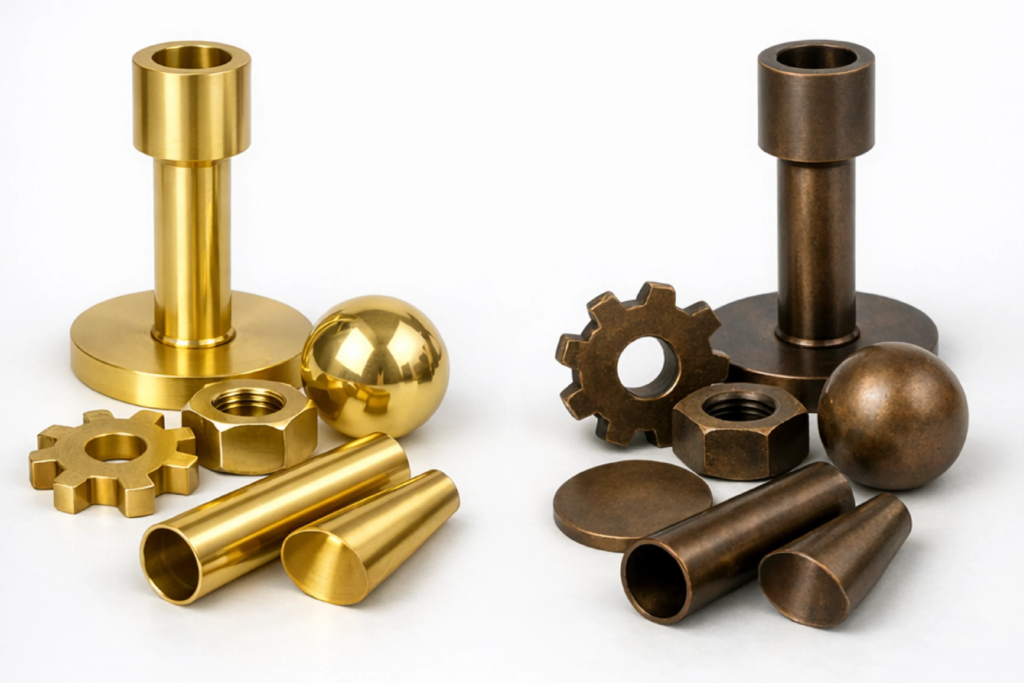
After looking at how to choose between cast iron, cast steel, and aluminum alloys, one more group of materials deserves attention because it plays a critical role in many industrial applications: copper-based alloys. Copper, brass, and bronze each have distinct characteristics that make them the first choice for jobs that iron, steel, and aluminum cannot do well.
Cast Copper: Unmatched Conductivity
Pure copper is rarely cast in its pure form for structural applications. It is far more often used as an alloy. For applications where maximum electrical and thermal conductivity come first, however, cast copper (or high-copper alloys) remains the leading choice.
Common applications: electrodes for resistance welding, electric motor rotors, and cooling system components such as heat exchangers that need high thermal conductivity.
Production challenges: molten copper readily absorbs hydrogen and oxygen during melting. Without the right melting atmosphere, this can cause severe gas porosity. The problem is similar to the one described in our porosity and hot tearing case study, but the gas absorption mechanism is specific to copper.
Brass: A Copper-Zinc Alloy for Machinability and Appearance
Brass is an alloy of copper with zinc as the main alloying element. Its properties depend heavily on the copper-to-zinc ratio.
Key characteristics:
- Excellent machinability, especially in free-cutting brass grades that contain a small amount of lead to make machining easier
- Good corrosion resistance, particularly against water and humid atmospheres
- A golden appearance that makes it popular for decorative uses
Common applications: plumbing fittings (taps and valves), musical instrument parts (especially brass wind instruments), decorative hardware, and precision components that need further machining after casting, as covered in finishing and machining.
Production considerations: zinc vaporizes at high temperature during melting. This calls for careful temperature control and ventilation, both for casting quality and to protect operators from zinc fume exposure (zinc fume fever).
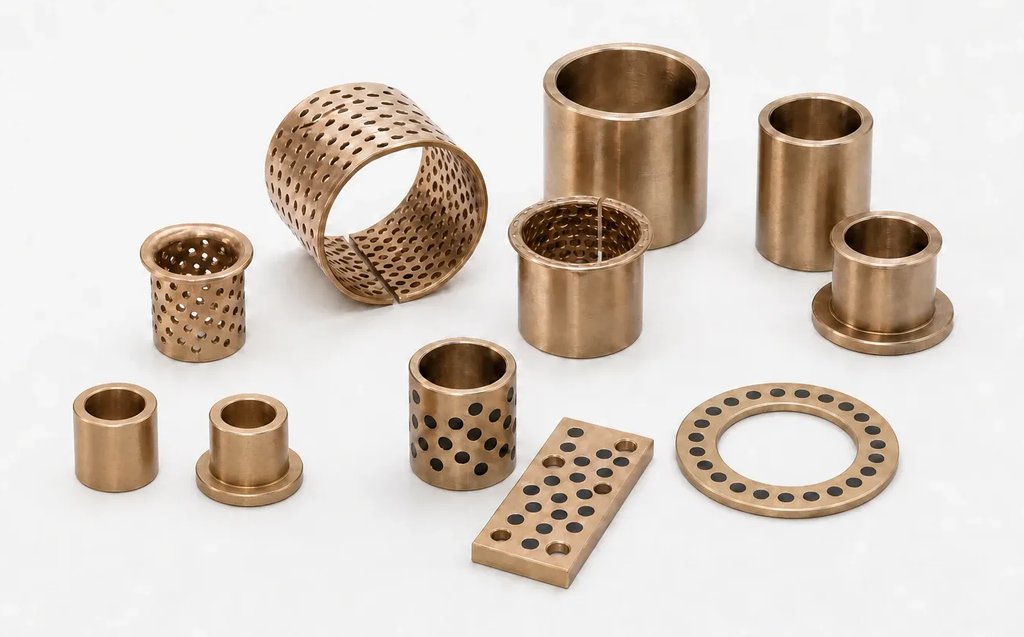
Bronze: Wear Resistance and an Engineering Tradition
Bronze is an alloy of copper with tin as the main alloying element, although modern variants also include aluminum bronze, silicon bronze, and others. People have used it for thousands of years, and it remains relevant in modern industry because its combination of properties is hard to match.
Key characteristics:
- Excellent wear and friction resistance, which makes it ideal for bearings and bushings
- Excellent corrosion resistance, including against seawater, which is why bronze is widely used in marine applications
- Higher mechanical strength than brass in many alloy grades
Common applications: bushings and bearings for heavy machinery, ship propellers, valve components for the chemical and marine industries that need extreme corrosion resistance, and statues and art castings that take advantage of bronze’s ability to capture fine detail through processes such as investment casting.
Quick Comparison of the Three Alloys
| Aspect | Copper | Brass | Bronze |
|---|---|---|---|
| Main alloying element | (pure or high-copper) | Zinc | Tin (or Al/Si) |
| Electrical conductivity | Very high | Moderate | Low to moderate |
| Wear resistance | Low | Moderate | Excellent |
| Seawater corrosion resistance | Moderate | Moderate | Excellent |
| Machinability | Moderate | Excellent | Moderate |
| Typical applications | Electrical, thermal | Fittings, decorative | Bearings, marine |
Common Challenges in Casting Copper-Based Alloys
Beyond the challenges specific to each alloy, several apply across copper alloys in general:
Wide solidification range. Some alloys, especially high-tin bronzes, solidify over a wide temperature range. This raises the risk of shrinkage porosity and demands careful riser system design so that enough liquid metal is fed during solidification.
Reactivity with certain molding sands. Some copper alloys can react with particular sand binders, producing surface defects if the mold material combination is not chosen correctly.
Volatile raw material cost. Copper is a globally traded commodity and its price is quite volatile. Foundries that rely on copper-based alloys as a main product line need careful raw material procurement planning.


