Adding to the case studies on automotive and other sectors, medical devices present a unique set of demands: materials must be safe in contact with human tissue, often for very long periods, while still meeting strict dimensional precision and mechanical property requirements.
Key Cast Components in Medical Devices
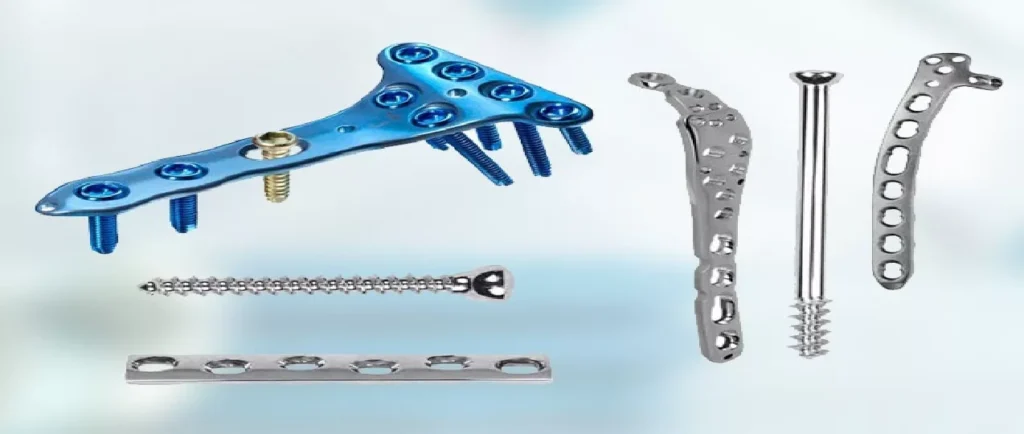
Orthopedic implants. Artificial hip and knee joint components are often made by investment casting using cobalt-chromium or titanium alloys, chosen for their combination of strength, wear resistance, and long-term biocompatibility inside the body.
Surgical instruments. Scissors, forceps, and various precision instruments are generally cast from medical-grade stainless steel, then go through thorough finishing and polishing to ensure a smooth surface that is easy to sterilize and does not injure tissue.
Diagnostic equipment components. Housings for some imaging equipment and structural components of laboratory instruments use cast aluminum alloys, chosen for light weight and dimensional stability.
Dental components. Dental crowns, denture frameworks, and various dental restorations use high-precision investment casting with cobalt-chromium alloys or precious metals, taking advantage of the process’s ability to capture very fine detail.
Non-Negotiable Biocompatibility Requirements
Materials must pass strict biocompatibility testing. Alloys used for long-term body contact, such as medical-grade cobalt-chromium and titanium, must be proven not to trigger toxic reaction, allergy, or chronic inflammation through a series of international standard tests.
Very precise chemical composition control. Impurity levels considered acceptable for ordinary industrial applications can become a serious problem in medical applications, demanding raw material purity and melting process control far stricter than metal casting for non-medical uses.
Freedom from internal defects. For implants bearing mechanical loads inside the body for years, even the smallest porosity or inclusion can become the starting point for a fatigue failure leading to revision surgery, a far more serious consequence than an ordinary industrial component failure.
Very Strict Regulatory Standards
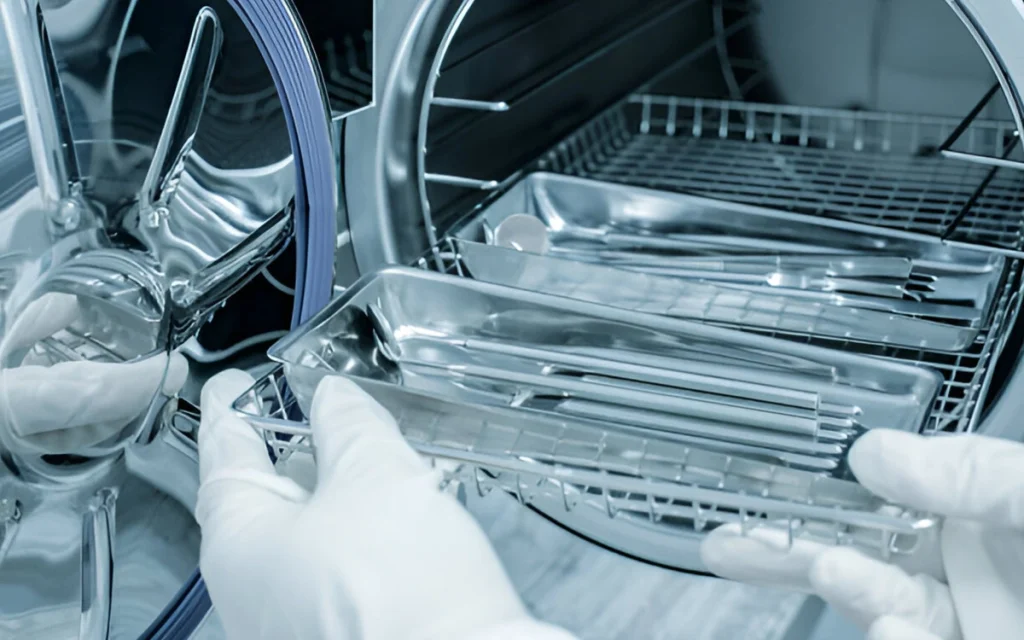
Quality management system certification. Medical component manufacturers are generally required to meet standards such as ISO 13485, a quality management system specific to medical device manufacturing that is far stricter than general manufacturing quality standards.
Health regulator approval. Before they can be marketed, implants and medical devices must go through a health authority approval process that thoroughly evaluates product safety and efficacy, including clinical trial data for higher-risk product categories.
Complete material traceability. Every material batch must be traceable back to its raw material source and its entire process history, enabling precise recalls if a problem is found in a particular batch.
100% inspection for critical components. Unlike many other industries that can rely on sampling, critical implants are often inspected individually and thoroughly using a combination of non-destructive testing and precision dimensional inspection.
Business Challenges for Foundries Serving This Sector
Low volume, very high value. Implant and medical instrument production generally runs at much lower volume than automotive, but the value added per unit is far greater, requiring a business model different from mass production.
Certification and regulatory compliance cost. Entering the medical supply chain requires major investment in ISO 13485 certification and ongoing audits, creating a significant barrier to entry for new foundries.
Near-zero tolerance for error. The consequences of product failure for a patient mean the culture of quality and documentation must be far stricter than in industry generally.
Lessons from the Highest-Stakes Sector
This medical device case study confirms that in some sectors, quality is not just a competitive advantage but an absolute requirement that directly determines patient safety. For foundries considering entering this sector, readiness for long-term investment in quality systems and regulatory compliance matters far more than technical casting capability alone.