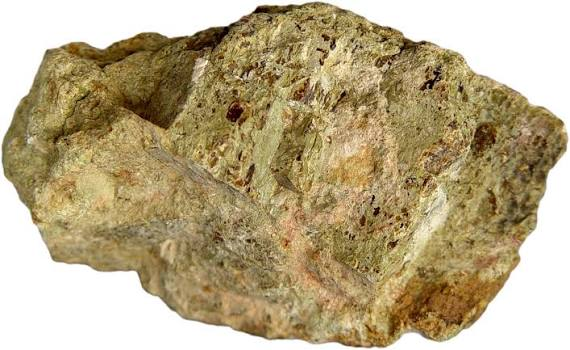
Rare earth minerals are naturally occurring minerals that contain rare earth elements in concentrations high enough to be of interest. The elements themselves are never found as pure metals in nature. They are always locked inside minerals, usually several of them together.
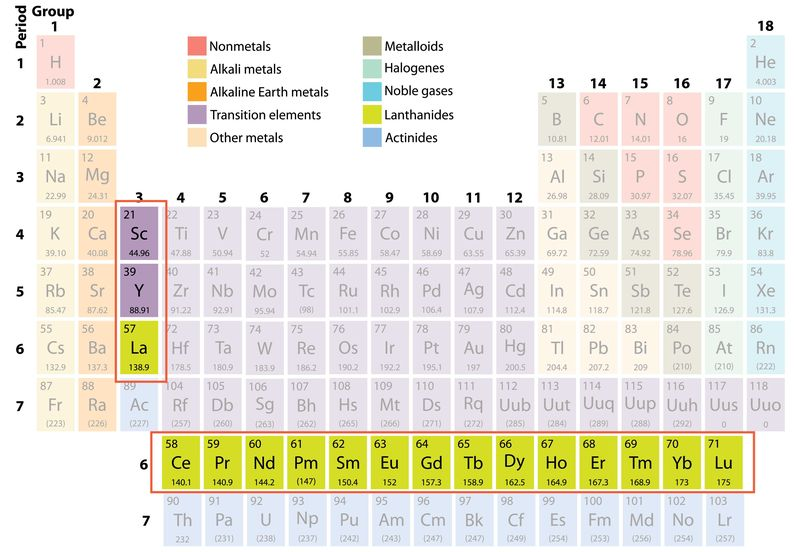
The terms are easy to confuse. Rare earth elements are the 17 elements described in Rare Earth Elements 101. Rare earth minerals are the natural compounds that carry them. Rare earth ore is rock that contains enough of those minerals to be mined at a profit.
More than 200 minerals are known to contain rare earths. Commercial production comes from only a few.
The Main Rare Earth Minerals at a Glance
| Mineral | Type | Rare earths it carries | Main deposit setting |
|---|---|---|---|
| Bastnäsite | Fluorocarbonate | Light (cerium, lanthanum, neodymium) | Carbonatites |
| Monazite | Phosphate | Light, with thorium | Placers, carbonatites |
| Xenotime | Phosphate | Heavy, rich in yttrium | Placers, with tin and heavy mineral sands |
| Ion-adsorption clays | Clay with adsorbed ions, not a true mineral | Heavy and medium | Weathered granites |
| Loparite | Titanium-niobium oxide | Light | Alkaline igneous rocks |
| Eudialyte | Zirconium silicate | Mixed, relatively heavy-rich | Alkaline igneous rocks |
| Apatite | Phosphate | Minor amounts, by-product | Phosphate rock |
For the difference between the light and heavy groups, see light vs heavy rare earth elements.
Bastnäsite
Bastnäsite, also spelled bastnasite, is a fluorocarbonate mineral and the world’s most important source of light rare earths. The pure mineral contains roughly 70% rare earth oxides, dominated by cerium and lanthanum, with useful amounts of neodymium and praseodymium.
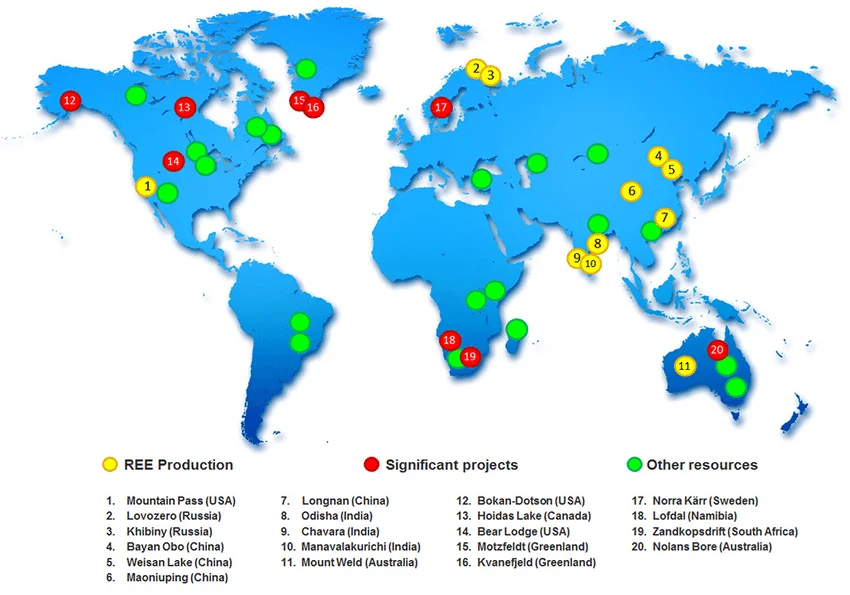
It is found mainly in carbonatites, which are unusual igneous rocks made largely of carbonate minerals. The two best-known bastnäsite deposits are Bayan Obo in China, where it occurs with monazite, and Mountain Pass in the United States.
Bastnäsite contains very little thorium, which makes it simpler to process than monazite.
Monazite
Monazite is a rare earth phosphate. It carries light rare earths in proportions similar to bastnäsite, with somewhat more neodymium, and the pure mineral contains roughly 55–65% rare earth oxides.
Its drawback is thorium. Monazite typically holds several percent thorium and a little uranium, so the mineral is mildly radioactive, and its processing residues must be managed as radioactive waste. This is one reason monazite lost ground to bastnäsite for decades.
Monazite is dense and resistant to weathering, so it collects in beach and river sands along with ilmenite, rutile, and zircon. Such placer deposits are worked in India, Brazil, Australia, and parts of Southeast Asia. It also occurs in hard-rock deposits such as Mount Weld in Australia.
Xenotime
Xenotime is an yttrium phosphate and one of the few minerals rich in heavy rare earths, including dysprosium and terbium. It is far less abundant than bastnäsite or monazite.
It is usually recovered as a by-product from placer deposits, often alongside monazite and the tin mineral cassiterite. In Indonesia, monazite and xenotime occur in the tin tailings of Bangka Belitung, which is why those tailings feature in the country’s rare earth plans. See Indonesia’s rare earth downstream industry.
Ion-Adsorption Clays
Ion-adsorption clays are not minerals in the strict sense. They form when granite weathers in a warm, wet climate. The rare earths released from the rock stick to the surfaces of clay particles as loosely held ions.
These deposits are very low grade, often only a fraction of one percent rare earth oxides. They matter for two reasons:
- They are rich in heavy rare earths, which the large hard-rock deposits mostly lack.
- They are easy to process. The rare earths can be washed off with a salt solution, with no crushing, grinding, or high-temperature cracking, and they contain very little thorium.
Southern China and Myanmar supply most of the world’s heavy rare earths from clays of this kind. The leaching methods used have caused serious soil and water damage, discussed in the environmental impact of rare earth mining.
Other Rare Earth Minerals
- Loparite is a titanium-niobium oxide mined in Russia’s Kola Peninsula for light rare earths, niobium, and tantalum.
- Eudialyte is a complex zirconium silicate found in alkaline rocks in Greenland, Canada, and Russia. It has a favorable share of heavy rare earths but is difficult to process.
- Apatite from phosphate fertilizer production contains small amounts of rare earths that can be recovered as a by-product.
- Allanite, fergusonite, euxenite, and gadolinite are well known to mineralogists but are rarely economic. Gadolinite is historically important: several rare earths were first discovered in it.
Types of Rare Earth Deposits
| Deposit type | How it forms | Typical minerals | Examples |
|---|---|---|---|
| Carbonatite | Carbonate-rich magma | Bastnäsite, monazite | Bayan Obo, Mountain Pass, Mount Weld |
| Alkaline igneous | Unusual sodium- and potassium-rich magma | Loparite, eudialyte | Lovozero, deposits in Greenland |
| Placer | Heavy minerals concentrated by water | Monazite, xenotime | Coastal sands of India, Brazil, Australia |
| Ion-adsorption clay | Deep weathering of granite | Adsorbed rare earth ions | Southern China, Myanmar |
| By-product sources | Recovered during other mining | Apatite, tin tailings | Phosphate and tin operations |
Which countries hold these deposits is covered in global rare earth reserves and production.
From Mineral to Metal
The mineral type determines the processing route.
- Mining and beneficiation. Hard-rock ore is crushed and ground, then the rare earth minerals are concentrated by flotation, gravity, or magnetic separation. Placer sands need no crushing.
- Cracking. The concentrate is attacked with acid or caustic at high temperature to break down the mineral. Clays skip this step.
- Leaching and purification. The rare earths are dissolved, and thorium, uranium, and other impurities are removed.
- Separation. The individual elements are separated from each other, mostly by solvent extraction.
Steps 2 and 3 are explained in rare earth extraction and refining, and step 4 in rare earth separation technology.
Why the Mineral Matters
- It decides which elements a mine produces. A bastnäsite mine yields mostly cerium and lanthanum, which are plentiful and cheap. The valuable magnet elements are a minor share.
- It decides the waste problem. Monazite brings thorium. Clays bring leaching chemicals.
- It decides cost. Minerals with no established processing route, such as eudialyte, can stay undeveloped for decades despite good grades.
Frequently Asked Questions
Are rare earth minerals actually rare? The elements are not especially rare in the Earth’s crust. What is rare is finding them concentrated in minerals and deposits that can be mined and processed economically.
Which mineral is the main source of rare earths? Bastnäsite for light rare earths, and ion-adsorption clays for heavy rare earths.
Is monazite dangerous? It is mildly radioactive because of its thorium content. The main concern is the handling and disposal of processing residues, not the sand itself.
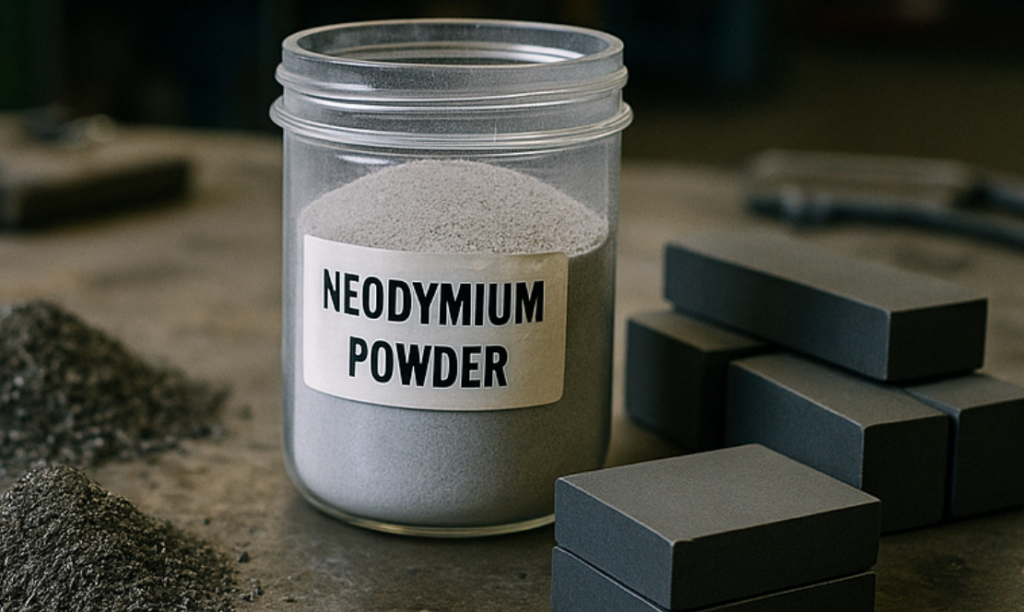
What is the difference between rare earth minerals and rare earth metals? Minerals are the natural compounds dug from the ground. Metals are the refined, separated elements produced at the end of processing.
Conclusion
Only a few rare earth minerals are of commercial importance: bastnäsite and monazite for light rare earths, xenotime and ion-adsorption clays for heavy rare earths. The mineral in a deposit determines which elements it yields, how it must be processed, and what waste it leaves behind, which is why geology shapes the rare earth supply chain from the start.