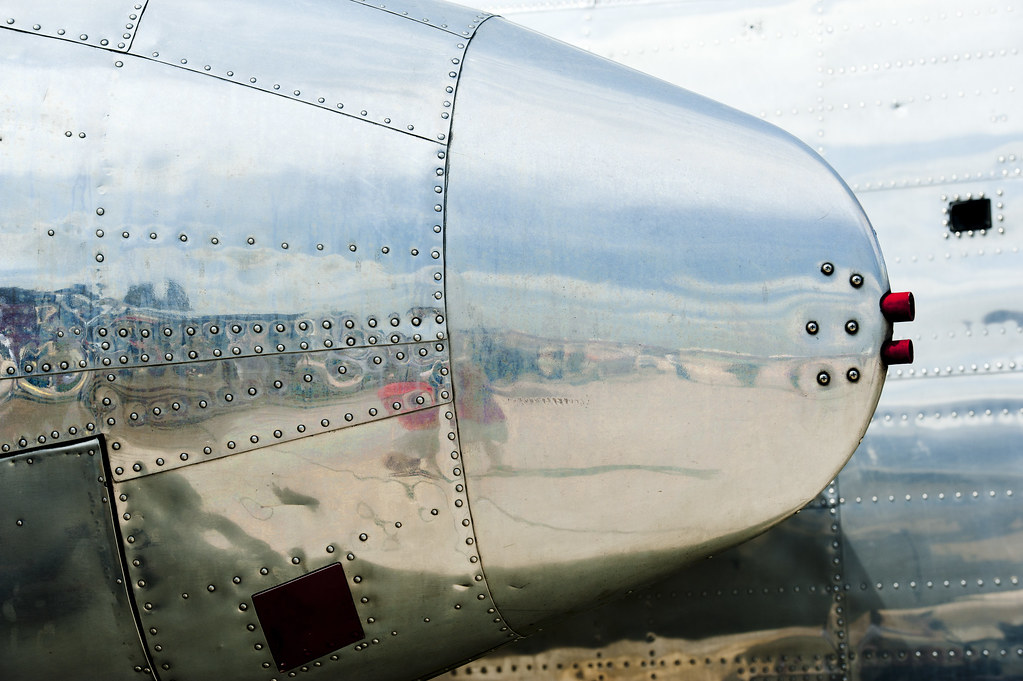
2024 aluminum is a heat-treatable aluminum-copper-magnesium alloy known for high strength and excellent fatigue resistance. It is the most widely used member of the 2xxx series, the alloys once sold under the name duralumin, and it has been a standard aircraft material for decades. Its weak points are corrosion resistance and weldability.
This guide covers what duralumin is, the composition and properties of 2024 aluminum, what the T3, T351, and T4 tempers mean, how Alclad protects it from corrosion, how to machine and join it, and how it compares with 6061 and 7075.
What Is 2024 Aluminum?
2024 belongs to the 2xxx series, where copper is the main alloying element (the full series system is explained in our guide to aluminum alloys). With about 4.4% copper and 1.5% magnesium, it reaches tensile strengths near 480 MPa (70 ksi) in the T3 temper, close to structural steel at about a third of the weight. Its other names include AA2024, Al 2024, EN AW-2024 (EN AW-AlCu4Mg1), and UNS A92024; its older designation was 24ST.
In aerospace, 2024 sheet and plate are bought to AMS-QQ-A-250/4 (bare 2024) and AMS-QQ-A-250/5 (Alclad 2024).
Is 2024 Aluminum the Same as Duralumin?
Mostly, yes. Duralumin began with the German metallurgist Alfred Wilm, who found in 1903 that a quenched aluminum alloy with about 4% copper became harder when left for a few days at room temperature. This was the discovery of age hardening. Dürener Metallwerke bought his patents and sold the alloy as Duralumin from 1909. It went into Zeppelin airship frames and, from 1916, into Hugo Junkers’ first all-metal aircraft.
The name stuck to the whole aluminum-copper family, which today is numbered 2xxx:
- 2017 is the closest to the original duralumin (about 4% copper, low magnesium).
- 2024 raises magnesium to about 1.5% for higher strength, and is the “duralumin” most used today.
- 2014 has more silicon and is used mainly for heavy forgings.
The mechanism Wilm found, solution treating, quenching, and aging, is covered in our guide to aluminum heat treatment.
2024 Aluminum Composition
| Element | 2024 (%) | 2017 (%) | 2014 (%) |
|---|---|---|---|
| Copper (Cu) | 3.8–4.9 | 3.5–4.5 | 3.9–5.0 |
| Magnesium (Mg) | 1.2–1.8 | 0.4–0.8 | 0.2–0.8 |
| Manganese (Mn) | 0.3–0.9 | 0.4–1.0 | 0.4–1.2 |
| Silicon (Si) | 0.5 max | 0.2–0.8 | 0.5–1.2 |
| Iron (Fe) | 0.5 max | 0.7 max | 0.7 max |
| Zinc (Zn) | 0.25 max | 0.25 max | 0.25 max |
| Chromium (Cr) | 0.10 max | 0.10 max | 0.10 max |
| Titanium (Ti) | 0.15 max | 0.15 max | 0.15 max |
| Aluminum (Al) | balance (about 90.7–94.7) | balance | balance |
What each element does:
- Copper forms fine precipitates (Al₂Cu and Al₂CuMg) during aging, which give the strength. It is also why the alloy has poor corrosion resistance.
- Magnesium strengthens the aging response. Its higher level is what separates 2024 from 2017.
- Manganese refines the grain and adds a little strength.
Physical Properties and Density of 2024 Aluminum
| Property | Value |
|---|---|
| Density | 2.78 g/cm³ (0.100 lb/in³) |
| Melting range | about 500–640 °C (930–1180 °F) |
| Modulus of elasticity | about 73 GPa (10.6 Msi) |
| Thermal conductivity | about 120 W/m·K (T3, T351); about 150 W/m·K (T851) |
| Electrical conductivity | about 30% IACS |
| Thermal expansion | about 23 × 10⁻⁶ /°C (12.8 × 10⁻⁶ /°F) |
| Magnetic | no |
2024 is slightly denser than 6061 (2.70 g/cm³) because of its copper content. A 1 m × 1 m × 10 mm plate weighs about 27.8 kg (61 lb).
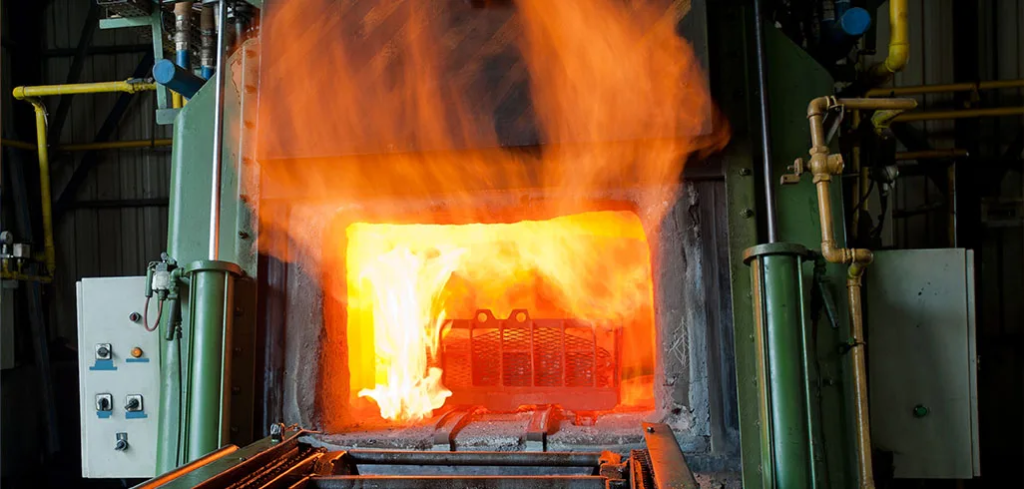
Note the low melting onset of about 500 °C (930 °F). The solution treating temperature of about 495 °C (920 °F) is only just below it, which is why 2024 furnaces need tight temperature control. Overheating melts the grain boundaries and ruins the part permanently.
2024 Aluminum Mechanical Properties by Temper
| Temper | Tensile strength | Yield strength | Elongation | Hardness (HB, approx.) |
|---|---|---|---|---|
| 2024-O (annealed) | 140–210 MPa (21–30 ksi) | 97 MPa (14 ksi) max | 10–25% | 47 |
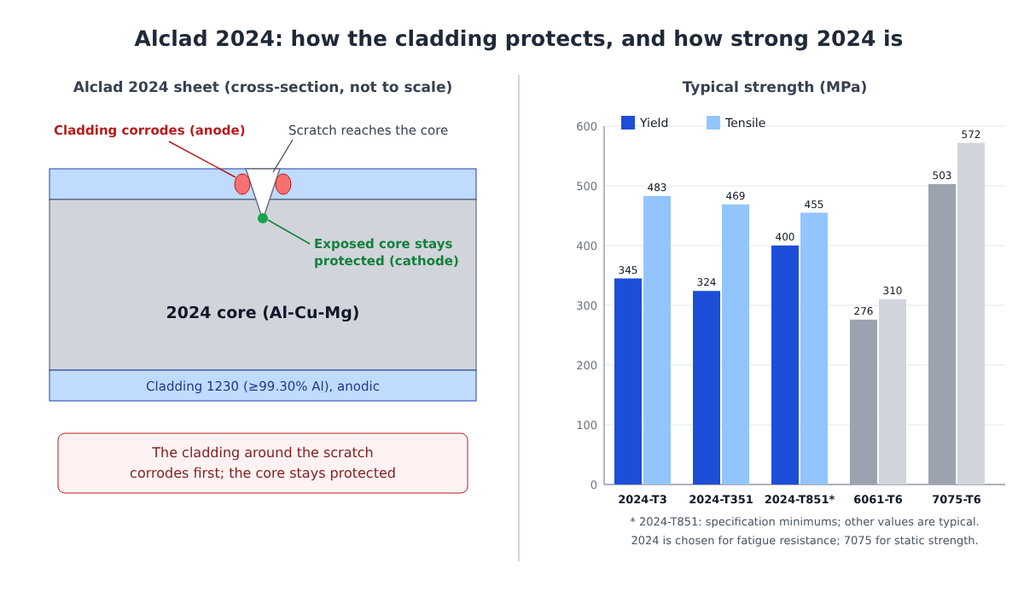
| 2024-T3 (sheet) | 483 MPa (70 ksi) | 345 MPa (50 ksi) | about 18% | 120 |
| 2024-T4 / T351 (plate, bar) | 469 MPa (68 ksi) | 324 MPa (47 ksi) | about 19% | 120 |
| 2024-T851 | about 455 MPa (66 ksi) min | about 400 MPa (58 ksi) min | about 6% | about 128 |
T3, T4/T351, and T851 values are typical data-sheet values; the O values are specification limits. For design, use the minimum values from the specification and the material certificate, which depend on thickness.
Two things stand out:
- T3 and T351 come close to the T6 strength of other alloys without any artificial aging. 2024 is one of the few alloys that reaches high strength by natural aging alone.
- Fatigue resistance is excellent. The fatigue strength of 2024-T351 is about 140 MPa (20 ksi), and fatigue cracks grow more slowly than in 7075. This is the main reason 2024 is used where aircraft structures see repeated tension.
What T3, T351, T4, T42, and T8 Mean
2024 is sold mostly in naturally aged tempers, unlike 6xxx and 7xxx alloys, which are usually bought as T6.
| Temper | Meaning | Typical product |
|---|---|---|
| T3 | Solution treated, quenched, cold worked (flattened or stretched), then naturally aged | Sheet |
| T351 | Solution treated, quenched, stretched 1.5–3% to relieve stress, then naturally aged | Plate, bar |
| T3511 | As T351, for extrusions, with minor straightening allowed after stretching | Extrusions |
| T4 | Solution treated, quenched, naturally aged, no deliberate cold work | Bar, wire, rivets |
| T42 | Solution treated by the user (from O or F), then naturally aged | Parts formed in the soft condition |
| T81, T851 | T3 or T351 followed by artificial aging (about 190 °C / 375 °F for 12 hours) | Elevated-temperature parts, better SCC resistance |
Natural aging in 2024 is fast. Hardness rises sharply within hours of quenching, and the properties are considered stable after about four days. Artificial aging to a T8 temper raises yield strength and resistance to stress corrosion cracking but lowers elongation and toughness.
Solution treating, quenching, and aging parameters for 2024, and the full temper code system, are covered in our guide to aluminum heat treatment.
Corrosion Resistance and Alclad 2024
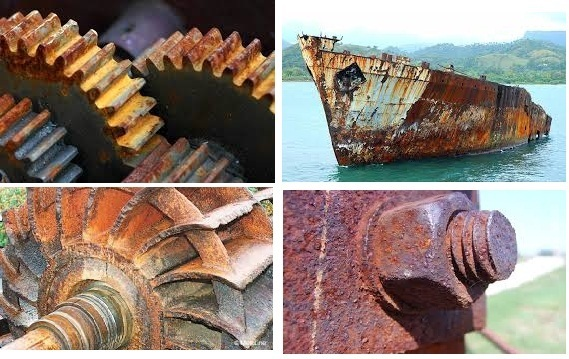
Corrosion is the main weakness of 2024. Copper-rich particles in the alloy are more noble than the surrounding aluminum, which sets up micro galvanic cells. As a result, 2024 is prone to:
- Pitting and intergranular corrosion, especially in marine and humid air. Thick plate that was quenched too slowly is more prone to intergranular attack.
- Exfoliation corrosion, where thin layers lift parallel to the rolling direction.
- Stress corrosion cracking (SCC) in the T3 and T4 tempers, especially under tension in the short-transverse direction of plate. T8 tempers are far more resistant. The mechanism is covered in our guide to stress corrosion cracking.
For a broader view of how aluminum alloys corrode, see our article on aluminum corrosion.
How Alclad protects 2024
For aircraft sheet, the corrosion problem is solved with Alclad. A 2024 core is clad on both sides with a thin layer of high-purity aluminum, usually alloy 1230 (99.30% aluminum minimum), bonded during hot rolling so that it becomes part of the sheet rather than a coating that can peel.
The cladding protects in two ways. Pure aluminum is far more corrosion resistant than 2024, and the cladding is anodic to the core. If a scratch reaches the core, the cladding around it corrodes first and the core stays protected. This is the same sacrificial-anode principle that zinc provides on galvanized steel, explained in our guide to how to prevent corrosion.
The trade-off is that the soft cladding carries less load, so Alclad sheet has slightly lower strength and fatigue strength than bare 2024 of the same thickness. Alclad sheet is shinier than bare 2024 and new sheet is printed “ALCLAD”.
Thick plate, bar, and machined parts cannot be Alclad, so they are usually protected by anodizing or a chromate or chromium-free conversion coating, followed by primer and paint. Avoid direct contact with carbon steel, copper, or carbon fiber without insulation, because 2024 becomes the anode in galvanic corrosion.
Working with 2024 Aluminum
Machining
In the T3, T351, and T4 tempers, 2024 machines well. It is hard enough not to gum up the tool, gives a good surface finish, and produces shorter chips than soft aluminum. In the O temper it is soft and gummy and is rarely machined that way.
Welding
2024 is not suitable for arc welding (TIG or MIG). The weld metal is prone to hot cracking during solidification, and the heat-affected zone loses its aged strength. 2024 parts are joined with rivets or bolts. In production, friction stir welding can be used because the metal never melts.
If a part has to be welded, choose a different alloy from the start, such as 6061 or a 5xxx alloy.
Forming and rivets
2024-T3 can be bent over generous radii. Complex shapes are better formed in the O temper and then solution treated and aged (giving T42), or formed right after quenching while the metal is still in the soft W temper.
Aircraft rivets are also 2xxx alloys. The most common is 2117-T4 (“AD”), which is soft enough to drive as received. Stronger 2017 and 2024 rivets must be driven soon after solution treating and quenching, before they harden, so they are kept in a freezer to delay aging. These are the “icebox rivets” described in our aluminum heat treatment guide.
Anodizing
2024 can be anodized, but the results differ from 6061. Copper makes the oxide thinner and less uniform, and the color tends toward yellow or gray, so it is a poor choice for decorative colored anodizing. Sulfuric and chromic acid anodizing are still widely used on 2024 for corrosion protection. See our guide to aluminum anodizing.
2024 vs 6061 vs 7075
| Property | 6061-T6 | 2024-T3 | 7075-T6 |
|---|---|---|---|
| Series and main elements | 6xxx, Mg and Si | 2xxx, Cu and Mg | 7xxx, Zn, Mg, Cu |
| Density (g/cm³) | 2.70 | 2.78 | 2.81 |
| Typical tensile strength | 310 MPa (45 ksi) | 483 MPa (70 ksi) | 572 MPa (83 ksi) |
| Typical yield strength | 276 MPa (40 ksi) | 345 MPa (50 ksi) | 503 MPa (73 ksi) |
| Fatigue resistance | moderate | excellent | good |
| Arc weldable | yes | no | no |
| Corrosion resistance | good | poor (use Alclad) | poor to moderate |
| Decorative anodizing | excellent | poor | good |
| Cost and availability | low, widely stocked | higher | highest |
2024 vs 6061
2024-T3 has about 55% higher tensile strength and about 25% higher yield strength than 6061-T6, with only about 3% higher density. Its fatigue resistance is also much better. In return, 6061 is weldable, far more corrosion resistant without added protection, anodizes better, and costs less.
As a rule of thumb, choose 2024 for parts that see repeated loads (vibration, cyclic tension) and are joined with bolts or rivets. Choose 6061 for parts that must be welded, are used outdoors or near the sea without paint, or must be bought in small quantities. For the full picture on 6061, see our guide to 6061 aluminum.
2024 vs 7075
7075-T6 is stronger and harder, while 2024 has better fatigue resistance and slower crack growth. On aircraft, 2024 goes where loads are mainly repeated tension, such as the fuselage skin and lower wing, while 7075 goes where loads are compressive and high static, such as the upper wing. More detail, including the T73 temper, is in our guide to 7075 aluminum.
Common Uses of 2024 Aluminum
- Aircraft structures: fuselage skin, lower wing skin, frames, and fittings under cyclic tension, usually as Alclad 2024-T3 sheet.
- Rivets and fasteners: 2017 and 2024 rivets, and high-strength aluminum bolts and nuts.
- Machined parts: small shafts, bearing housings, hydraulic fittings, and motorsport components from 2024-T351 bar.
- Jigs, fixtures, and light tooling.
- Sporting goods and light frames that are not welded.
How to Confirm You Have 2024
“Aircraft aluminum” and “duralumin” are loose trade names, and the material sold under them may be 2017, 2024, 6061, or 7075. To be sure:
- Check the mill marking. Plate and sheet are printed with alloy, temper, and specification, for example “2024-T351 AMS-QQ-A-250/4”.
- Ask for the material certificate with a heat or lot number that matches the material.
- Test the composition with XRF or OES. 2024 and 2017 show about 4% copper, 6061 only about 0.15–0.4%, and 7075 about 5.6% zinc.
- Measure electrical conductivity with an eddy current meter. 2024-T3 reads about 30% IACS, while 6061-T6 reads about 40–45% IACS.
- A magnet test is useless, because no aluminum alloy is magnetic.
How to Choose an Alloy and Temper
| Need | Common choice |
|---|---|
| Structural sheet under cyclic loads | Alclad 2024-T3 |
| Strong, fatigue-resistant bar or plate for machining | 2024-T351 |
| Parts that must be welded | 6061-T6 or a 5xxx alloy, not 2024 |
| Highest static strength | 7075-T6 or T651 |
| High strength with SCC resistance | 7075-T73 or 2024-T851 |
| Parts running somewhat above room temperature (up to about 120 °C / 250 °F) | 2024-T81 or T851 |
| Unpainted marine parts | 5083, 5052, or 6061, not bare 2024 |
Common Mistakes
- Buying “aircraft aluminum” or “duralumin” by name only and assuming it can be welded. If it turns out to be 2024 or 7075, the weld will crack.
- TIG or MIG welding 2024. Use rivets, bolts, or a different alloy.
- Using bare 2024 in marine environments without protection. Use Alclad, anodizing plus paint, or a different alloy.
- Sanding or polishing through Alclad. The cladding is thin, and once it is gone, so is the protection.
- Overheating 2024 during solution treating. Melting starts at about 500 °C (930 °F), only just above the solution temperature.
- Treating 2024 and 7075 as interchangeable. Both are aircraft alloys, but 2024 is chosen for fatigue resistance and 7075 for static strength.
FAQ
What is 2024 aluminum used for? Mainly aircraft structures under cyclic tension, such as fuselage skin and lower wing skin, plus rivets, fasteners, and high-strength machined parts that are bolted or riveted rather than welded.
Is 2024 aluminum the same as duralumin? Largely. Duralumin was the original trade name for aluminum-copper alloys first sold in 1909, and today the term covers the 2xxx series. 2024 is the most widely used of them, and 2017 is the closest to the original alloy.
Can 2024 aluminum be welded? Not by conventional arc welding (TIG or MIG), because the weld cracks and loses strength. It is joined with rivets or bolts, and friction stir welding is used in production.
What is the difference between 2024-T3 and 2024-T351? The composition is the same and the strength is very similar. T3 usually applies to sheet that is cold worked after quenching, while T351 applies to plate and bar stretched 1.5–3% to relieve residual stress, which keeps it stable during machining.
Is 2024 stronger than 6061? Yes. 2024-T3 has a typical tensile strength of about 483 MPa (70 ksi), compared with about 310 MPa (45 ksi) for 6061-T6. But 6061 is weldable, more corrosion resistant, and cheaper.
Related Articles
- 7075 Aluminum: Composition, Properties, T6, T651, and T7351 Tempers, and 7075 vs 6061 and 2024
- 6061 Aluminum: Properties, Density, Composition, and 6061 vs 7075, 6063, and 5052
- Aluminum Heat Treatment: Solution Treating, Aging, and Temper Codes (T6, T651, T73)
- Aluminum Alloys: Series, Tempers, and Uses
- Aluminum Corrosion: Causes, Types, and Prevention

Dagus R. Djuanda is a metallurgical engineer with more than 20 years of experience in materials engineering, specializing in magnetic materials. He holds a master’s degree in magnetic materials engineering, is a doctoral candidate in industrial engineering, and works as an engineer at the Ministry of Industry of the Republic of Indonesia. Founder of Metalurgika.