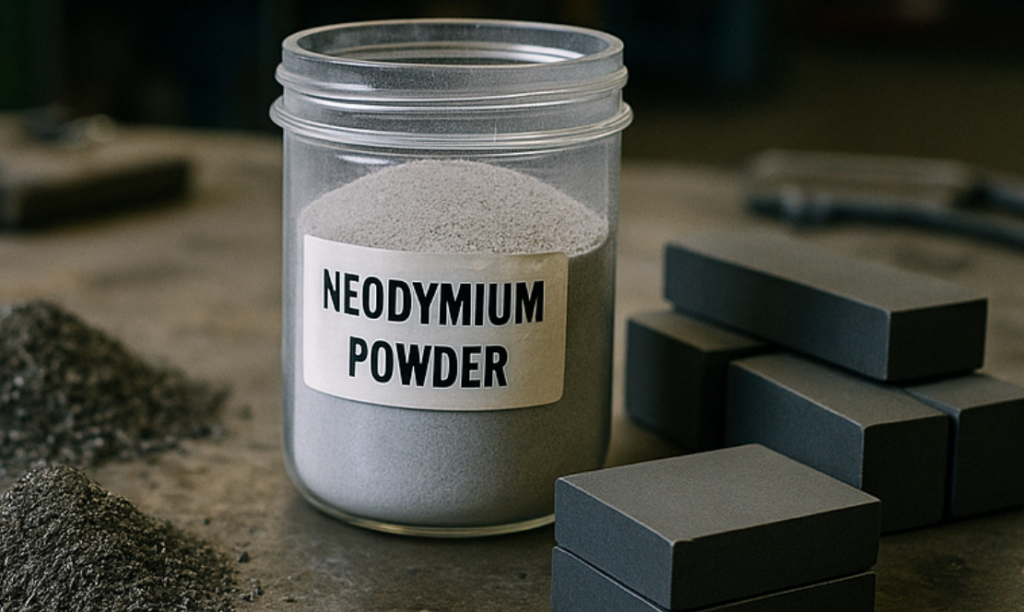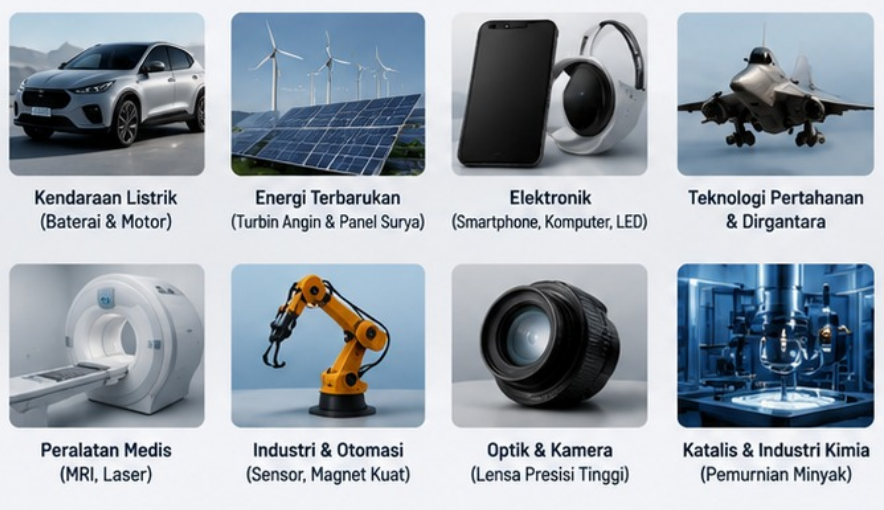
After covering yttrium and cerium as rare earth elements that get less media attention, this time it is the turn of two elements that get mentioned most often: neodymium and praseodymium. Both sit at the heart of the NdFeB permanent magnets that power electric vehicle motors and modern wind turbines.
Why Neodymium and Praseodymium Are Always Mentioned Together
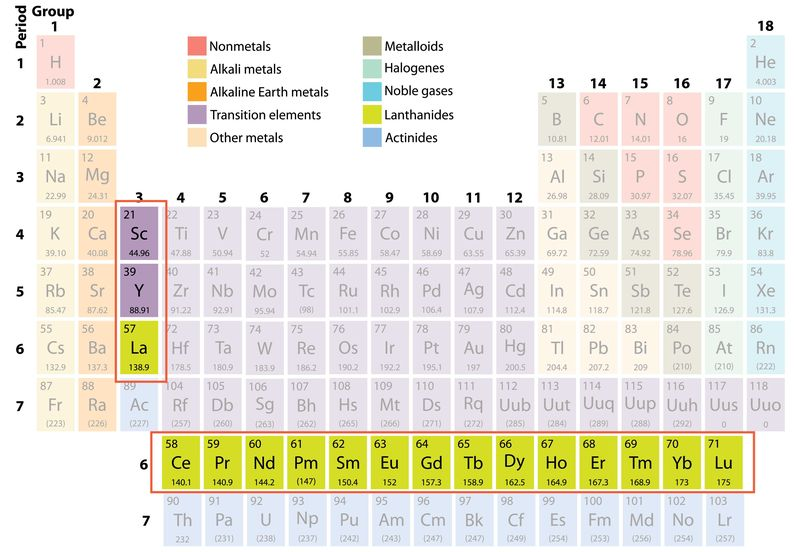
Neodymium and praseodymium are neighboring elements in the lanthanide series with very similar chemical properties, so in nature they are almost always found mixed in the same ore and are hard to separate economically to very high purity. Because of this, industry often uses a blend of the two, known as “didymium”, directly in magnet formulations without needing perfect separation into single elements, saving on the cost of the expensive separation process.
Their Role in NdFeB Magnets
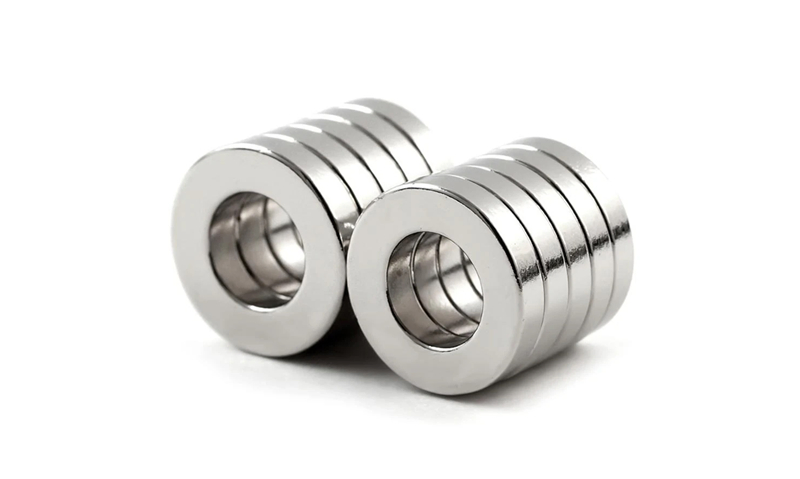
Neodymium-iron-boron (NdFeB) magnets are the strongest commercially available permanent magnets, with a magnetic field strength per unit volume far exceeding conventional ferrite magnets.
Neodymium’s role: it is the main component of the Nd2Fe14B magnetic phase responsible for this magnet’s field strength.
Praseodymium’s role: often added alongside neodymium in a certain proportion, giving a small boost to maximum working temperature and sometimes used as a partial substitute when pure neodymium supply is limited or expensive.
Why this magnet is so strong: the special crystal structure of the Nd2Fe14B phase produces very high magnetic anisotropy, letting the magnet retain its field strength even at a much smaller size than a ferrite magnet of equivalent strength, a crucial property for applications that prioritize weight and compact size such as EV motors.
The Weak Point: High Temperature and Dysprosium’s Role
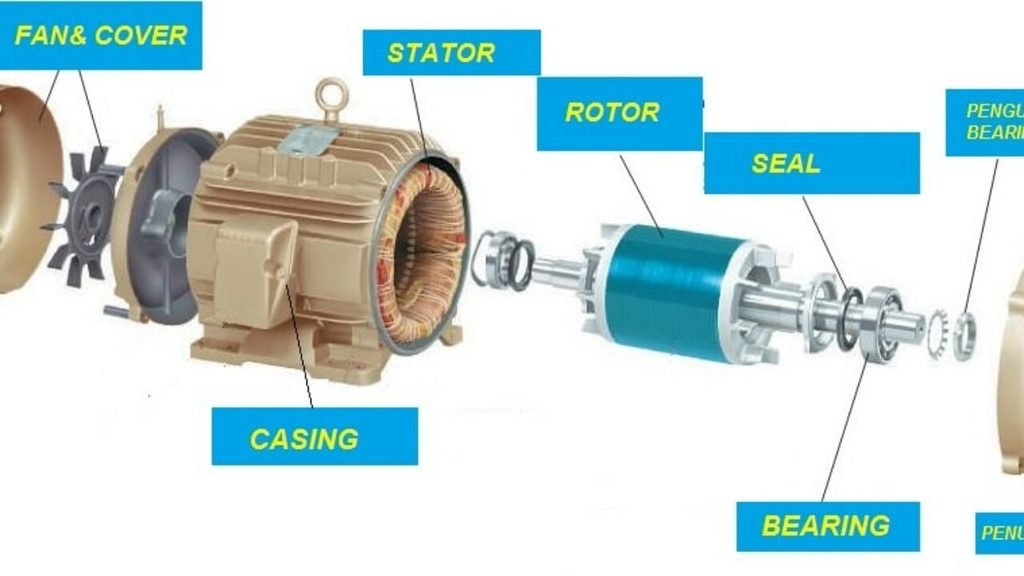
The main weakness of pure NdFeB magnets is a significant drop in magnetic strength at high temperature, and a risk of permanent demagnetization if they get too hot, a serious problem for motors operating at high temperature during intensive use.
The solution is adding dysprosium or terbium in small amounts, two HREE elements discussed in the LREE vs HREE comparison, to improve the magnet’s thermal resistance. This is one reason dysprosium is the HREE element whose availability raises the most concern, even though it is needed in a far smaller proportion than neodymium in a magnet formulation.
Market Dynamics Heavily Driven by EV Demand
Unlike cerium, whose demand is relatively stable, neodymium-praseodymium prices and demand are highly sensitive to electric vehicle and renewable energy growth projections, as discussed in the REE price and market analysis. Any change in global EV sales projections tends to be reflected almost immediately in price expectations for these two elements.
Efforts to Reduce Dependence
Given the price sensitivity and supply chain risk, several approaches are being developed in industry to reduce reliance on neodymium-praseodymium:
Motor designs with more efficient magnet use. Optimizing motor geometry to maximize magnetic field from a smaller magnet volume, reducing raw material needed per motor unit.
Recycling used magnets. As discussed in the article on recycling rare earth elements, recovering neodymium and praseodymium from used motors and hard drives is an alternative supply source that continues to be developed.
Research into alternative magnets. As discussed in non-rare earth magnet alternatives, induction motors and ferrite magnets remain an option for applications that do not need maximum power density.
Why This Duo Stays in the Spotlight
Neodymium and praseodymium will likely remain the most talked-about rare earth elements for the foreseeable future, because of their irreplaceable position in applications demanding the highest power density, such as high-performance EV motors and offshore wind turbines. Understanding their specific roles, and how dysprosium fills in their thermal weakness, gives a more solid foundation for understanding the broader “rare earth crisis” narrative that is often oversimplified in the media.