
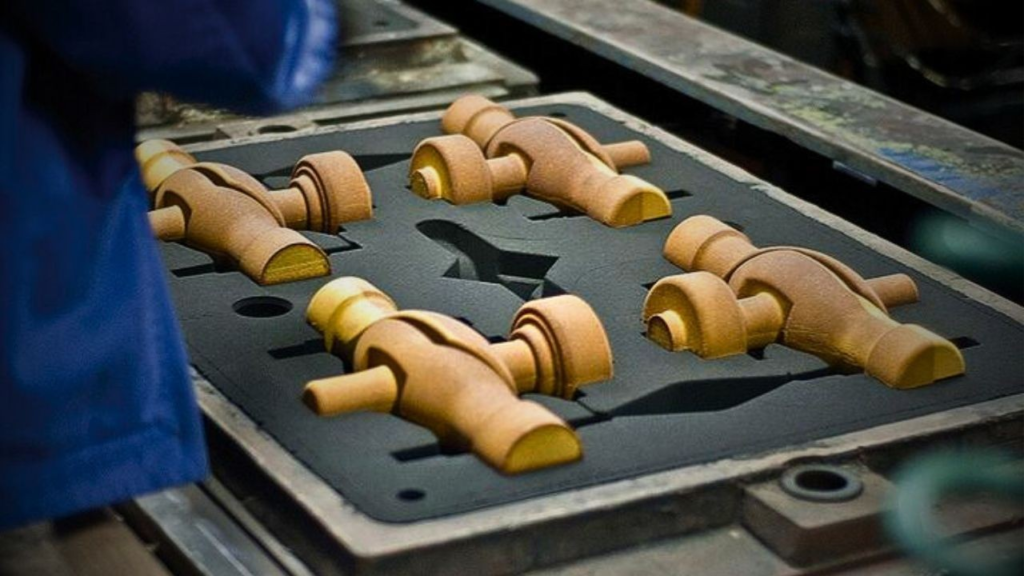
Behind impressive metal castings lies an environmental problem that rarely gets attention: massive volumes of used mold sand, plus emissions from the conventional chemical binders used to hold sand grains together into a solid mold. Research into eco-friendly binder materials is now an important focus of sustainability efforts in the metal casting industry.
Why Sand Mold Binders Are an Environmental Issue
Conventional sand molds need a binder to hold the sand grains in a stable shape while molten metal is poured. For how the mold itself is built, see our guide to the sand mold. The most common conventional binders, such as furan or phenolic resins, work well technically but bring several significant environmental problems:
Volatile organic compound (VOC) emissions. Many conventional chemical binders release VOCs during mixing, mold making, and especially on contact with high-temperature molten metal. These emissions affect air quality and worker health in the foundry.
Huge volumes of used sand. After use, sand mixed with binder usually cannot be fully recycled right away, creating significant solid waste that needs special handling, including a risk of soil contamination if managed poorly.
Odors and hazardous gases during processing. Some conventional binders produce strong odors and gases that can harm worker health without adequate ventilation, adding workplace safety challenges in the foundry.
Green Sand Binders: Back to a More Natural Approach
The term “green sand” has long been used in casting to describe sand molds made from a mixture of sand, clay (bentonite) as a natural binder, and water, with no synthetic chemical binder. Current research is pushing both further optimization of this traditional approach and new, more environmentally friendly binder alternatives:
Modern bentonite formulations. Materials research continues to develop more efficient bentonite mixes that reduce the water and chemical additives needed while maintaining or even improving mold strength and casting surface quality.
Binders from renewable organic materials. Some research explores binders based on starch, sugar, or other renewable organic materials as alternatives, potentially reducing reliance on petrochemical resins and making used sand easier to recycle.
Inorganic binder systems. Unlike organic binders, which tend to produce emissions when burned by molten metal, inorganic binders (such as silicate-based ones) promise much lower VOC emissions, although they still face technical challenges with mold strength and ease of shakeout after casting.
Recycling Mold Sand: Reducing Waste Volume
Beyond the binder formulation itself, sustainability efforts include technology for recycling used mold sand so it can be reused:
Mechanical reclamation. Removing leftover binder from the sand grains mechanically (for example by attrition or vibration) so the sand can be reused in the next production cycle instead of being fully replaced with new sand.
Thermal reclamation. Heating used sand to high temperatures to burn off organic binder residue, producing cleaner sand for reuse, although the process itself uses energy that needs to be counted in the overall carbon footprint.
Using digital simulation to optimize sand use. Casting process simulation also helps optimize mold design to minimize the volume of sand needed in the first place, cutting both material costs and waste per part produced.
Adoption Challenges in Industry
Trade-offs in casting quality. Some alternative eco-friendly binders do not yet fully match conventional binders in mold strength, casting surface finish, or dimensional consistency, creating trade-offs that must be evaluated carefully for each application.
Transition costs and process adaptation. Switching to an alternative binder often requires adjusting process parameters, retraining operators, and sometimes investing in new equipment, transition costs that need to be weighed against the long-term environmental benefits.
Availability and supply scale. Some alternative binders based on renewable organic materials are not yet available at an adequate and consistent industrial supply scale, limiting how fully large foundries can adopt them in the near term.
Why This Trend Will Keep Growing
Tighter environmental regulations in many countries, along with demands from customers and business partners for sustainable manufacturing, are building momentum for green sand binder research and adoption that is likely to keep strengthening. For the foundry industry, including in Indonesia, which faces similar pressure on industrial environmental standards, tracking developments in eco-friendly binder technology is a relevant part of long-term sustainability strategy, in line with the broader sustainability trend in the global metallurgy industry.


