The “T6” in 6061-T6 or 7075-T6 is not a grade or a purity level. It records the heat treatment the metal has received. Aluminum heat treatment for strength works through precipitation hardening: the alloy is heated until its alloying elements dissolve (solution treating), cooled fast (quenching), and then aged so that tiny particles form inside the metal. It works in a completely different way from hardening steel, and only some aluminum alloys respond to it. This guide covers how the process works, what each temper code means, typical parameters for common alloys, and the temper differences that confuse buyers most, such as T6 vs T651.
Why Aluminum Is Not Hardened Like Steel
Steel is hardened by quenching: austenite at high temperature transforms into hard martensite when cooled fast, and the part is then tempered so it is not brittle. That process is covered in our article on quenching and tempering.
Aluminum has no such phase change. Freshly quenched aluminum is actually soft and ductile. Its strength rises afterward, when the alloying atoms “trapped” in the aluminum crystal cluster into extremely fine particles. This is called precipitation hardening, or age hardening.
It only works when the solubility of an alloying element in aluminum drops sharply as temperature falls. Magnesium plus silicon (6xxx series), copper (2xxx series), and zinc plus magnesium (7xxx series) meet that condition. Manganese (3xxx) and magnesium on its own (5xxx) do not.
Which Aluminum Alloys Can Be Heat Treated
| Group | Series or alloy | Strengthening precipitate | How it is strengthened |
|---|---|---|---|
| Heat treatable (wrought) | 2xxx | Copper (and magnesium) | Solution treat, quench, natural or artificial aging |
| 6xxx | Magnesium and silicon (Mg₂Si) | Solution treat, quench, artificial aging | |
| 7xxx | Zinc and magnesium (MgZn₂) | Solution treat, quench, artificial aging | |
| Heat treatable (cast) | A356, A357, AlSi10Mg, 319 | Mg₂Si or copper | Solution treat, quench, artificial aging |
| Non-heat-treatable | 1xxx, 3xxx, 5xxx | No strengthening precipitate | Cold work (H tempers); heat is used only to anneal |
| A380, ADC12 (conventional die casting) | Chemically possible, but castings contain trapped air | Generally not given T6 (see the castings section) |
The wrought series and their uses are covered in our guide to aluminum alloys. If you heat a 5052 or 1100 sheet and quench it in water hoping to harden it, it comes out softer: these alloys can only be annealed by heat.
How Precipitation Hardening Works: Three Steps
1. Solution heat treatment
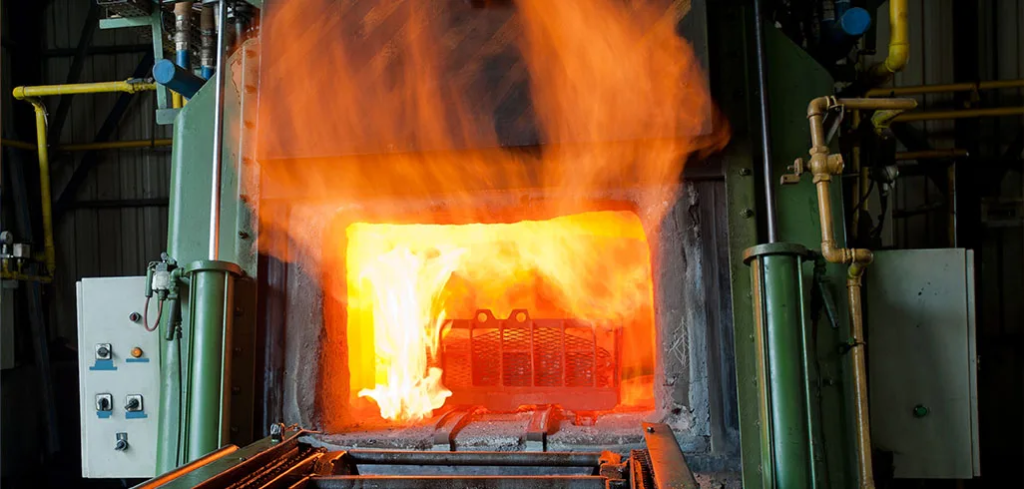
The metal is heated to just below its lowest melting point, usually 480–540 °C (900–1005 °F) depending on the alloy, and held long enough for the alloying elements to dissolve evenly. Hold time depends on thickness: thin sheet needs tens of minutes, while heavy castings can need up to 12 hours.
The upper limit is tight. If the temperature is too high, alloy-rich regions at the grain boundaries start to melt (eutectic melting, or “burning”). The damage is permanent and cannot be fixed by heat treating again. For thick 7075, for example, the recommended maximum is about 490 °C (915 °F).
2. Quenching
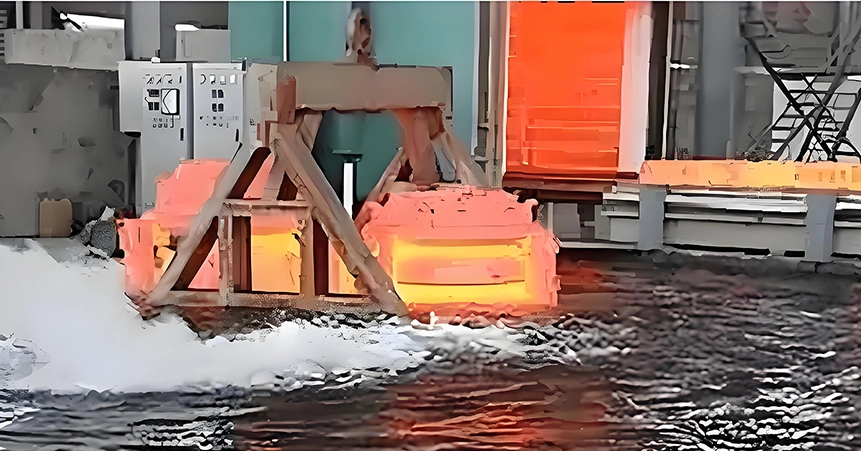
After solution treating, the metal is cooled as fast as practical, usually by immersion in water. The goal is to lock the alloying elements in solution at room temperature in a supersaturated state. This as-quenched condition is the W temper: soft, ductile, and unstable.
The time from opening the furnace door to the part entering the water (the quench delay) must be short. The old military specification MIL-H-6088 limited it to 15 seconds for parts thicker than 2.29 mm (0.090 in). If the delay runs long, some of the alloying elements precipitate at grain boundaries before the quench, and both final strength and corrosion resistance drop. 7075 is one of the most quench-sensitive alloys.
A very fast quench causes distortion and residual stress, so castings and forgings are often quenched into hot water or a polymer solution, accepting slightly lower strength. Some low-copper 6xxx alloys, such as 6061 and 6063, can be quenched with air or water spray as they leave the extrusion press.
3. Aging
The locked-in alloying elements then cluster into precipitates only a few nanometers across. These precipitates block dislocation movement and make the metal strong. There are two routes:
- Natural aging: left at room temperature. The result is the T4 temper (or T3 if cold work is included). 2024 reaches a stable T4 condition in about four days.
- Artificial aging: heated in an oven at about 120–190 °C (250–375 °F) for several hours. The result is the T6 temper when the metal is aged to near peak strength.
Because natural aging begins right after the quench, W-temper ductility disappears quickly. The classic example is 2024 “icebox rivets” in aircraft work: after quenching they are stored in a freezer at about −18 °C (0 °F) and must be driven within 10–20 minutes of removal. Left too long, they become too hard and crack when driven.
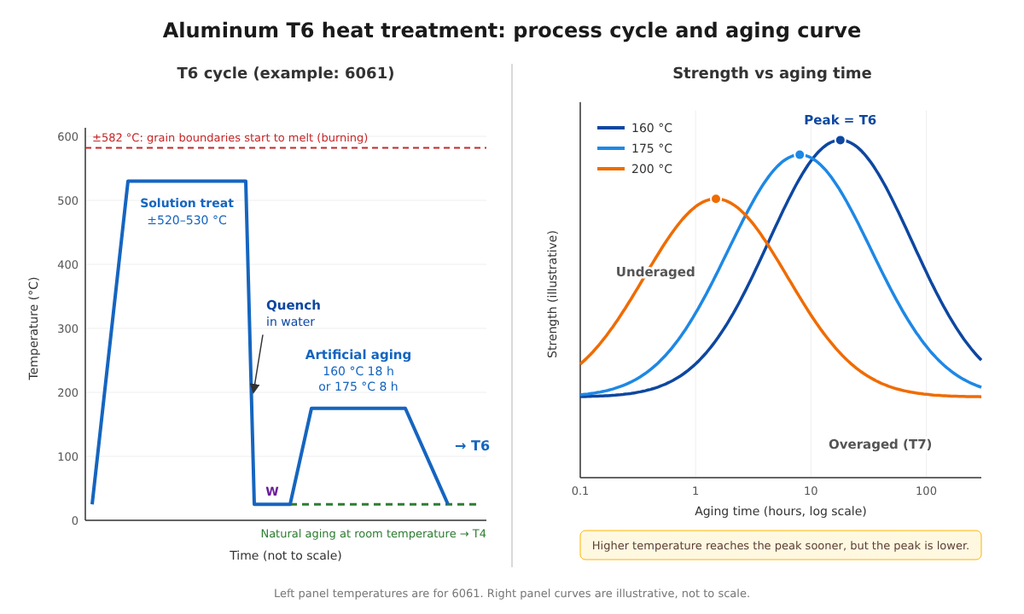
Underaged, peak aged (T6), and overaged (T7)
Strength does not keep rising for as long as the metal is aged. At first the precipitates are too small and too few (underaged). At a certain time strength reaches its peak: this is the T6 target. If aging continues, the precipitates coarsen and spread farther apart, and strength falls again (overaged).
Aging temperature shifts that curve. A higher temperature reaches the peak sooner, but the peak is lower. A lower temperature takes longer but reaches a higher peak. That is why 6061 can be aged at about 160 °C (320 °F) for 18 hours or about 175 °C (350 °F) for 8 hours, with both meeting T6.
Overaging is not always a mistake. T7 tempers are overaged on purpose: strength is a little below T6, but resistance to stress corrosion cracking and exfoliation corrosion is far better. The best-known example is 7075-T73 (see below).
Aluminum Temper Designations Explained
The temper code follows the alloy number after a hyphen, as in 6061-T6 or 5052-H32. The system is defined in the Aluminum Association’s ANSI H35.1 standard; the European equivalent is EN 515.
| Letter | Meaning |
|---|---|
| F | As fabricated, no control of mechanical properties |
| O | Annealed, the softest condition |
| H | Strain hardened by cold work, for non-heat-treatable alloys |
| W | Solution heat treated and quenched, unstable because it keeps aging at room temperature |
| T | Heat treated to a stable temper other than F, O, or H |
The first digit after T gives the process sequence:
| Temper | Process sequence |
|---|---|
| T1 | Cooled from an elevated-temperature shaping process, naturally aged |
| T2 | Cooled from an elevated-temperature shaping process, cold worked, naturally aged |
| T3 | Solution heat treated, cold worked, naturally aged |
| T4 | Solution heat treated, naturally aged |
| T5 | Cooled from an elevated-temperature shaping process, artificially aged |
| T6 | Solution heat treated, artificially aged |
| T7 | Solution heat treated, then overaged or stabilized |
| T8 | Solution heat treated, cold worked, artificially aged |
| T9 | Solution heat treated, artificially aged, cold worked |
| T10 | Cooled from an elevated-temperature shaping process, cold worked, artificially aged |
Note the difference between T5 and T6. T5 has no separate solution step: the hot extrusion leaving the press is cooled and then aged. Architectural 6063 extrusions for windows and doors are commonly supplied as T5. In T6 the part is reheated specifically for solution treatment, so strength is higher and more uniform.
Extra digits: T651, T6511, T7351
Digits after the first one indicate additional treatment. The most common is 51, meaning stress relieved by stretching after the quench:
- Tx51: stretched to a set amount of permanent deformation, with no straightening afterward. Plate 1.5–3%, rolled or cold-finished rod and bar 1–3%.
- Tx511: the same for extruded rod, bar, shapes, and tube (1–3%), but minor straightening is allowed after stretching.
- Tx52: stress relieved by compression.
So T651 means solution heat treated, stress relieved by stretching, then artificially aged. T7351 means the same with T73 aging. Codes such as T62 and T42 are used when the user, not the mill, heat treats the material.
6061 Tempers and Typical Parameters for Common Alloys
The figures below are general guidelines for wrought and cast products. For certified work, follow the applicable standard: AMS 2770 or ASTM B918 for wrought products, and AMS 2771 or ASTM B917 for castings.
| Alloy | Solution temperature | Quench | Aging for common tempers |
|---|---|---|---|
| 6061 | About 520–530 °C (970–985 °F) | Water | T6: about 160 °C (320 °F) 18 h, or 175 °C (350 °F) 8 h |
| 6063 | About 520 °C (970 °F), or straight from the press (T5) | Water, spray, or air | T6 and T5: about 175–205 °C (350–400 °F), 1–8 h |
| 6082 | About 530–540 °C (985–1005 °F) | Water | T6: about 160–175 °C (320–350 °F), 8–10 h |
| 7075 | About 480 °C (900 °F); about 490 °C (915 °F) maximum for thick sections | Water | T6: 120 °C (250 °F) 24 h. T73: 105 °C (225 °F) 6–8 h, then 165 °C (330 °F) 24–30 h |
| 2024 | About 495 °C (920 °F) | Water | T4/T3: natural aging. T81/T851: 190 °C (375 °F) 12 h |
| A356 (cast) | 525–540 °C (977–1004 °F), 4–12 h | Warm water | T6: about 150–170 °C (302–338 °F), typically 155 °C (311 °F), 3–10 h |
Two practical notes. First, solution soak time starts when the whole load reaches temperature, not when it enters the furnace. Second, furnace accuracy matters a great deal. The AMS 2750 pyrometry standard generally requires furnace uniformity of about ±6 °C (±10 °F) for solution treating, because the gap between the correct solution temperature and burning is only a few tens of degrees Fahrenheit.
6061-O vs T4 vs T6: mechanical properties
| Alloy and temper | Tensile strength | Yield strength | Elongation |
|---|---|---|---|
| 6061-O | 150 MPa (22 ksi) maximum | 83 MPa (12 ksi) maximum (sheet) | 10–18% |
| 6061-T4 | 241 MPa (35 ksi) typical | 145 MPa (21 ksi) typical | 10–16% |
| 6061-T6 / T651 | 310 MPa (45 ksi) typical, 290 MPa (42 ksi) minimum | 276 MPa (40 ksi) typical, 240 MPa (35 ksi) minimum | 8–17% |
| 7075-O | 228 MPa (33 ksi) typical | 103 MPa (15 ksi) typical | About 17% |
| 7075-T6 / T651 | 572 MPa (83 ksi) typical | 503 MPa (73 ksi) typical | About 11% |
| 7075-T73 | About 500 MPa (72 ksi) typical | About 410 MPa (60 ksi) typical | About 7% |
| A356-T6 (cast) | About 200–260 MPa (29–38 ksi) | Depends on process | 2–8% |
The table shows why T6 is the most popular temper: the yield strength of 6061 rises more than threefold from the O condition. The price is lower elongation and poorer bendability. If a part needs a tight bend, form it in the O or T4 condition and heat treat it to T6 afterward.
6061-T6 vs 6061-T651: What Is the Difference?
This is the most common question when buying aluminum plate and bar. The short answer: chemistry and strength are the same. The difference is residual stress.
During the quench, the surface of a plate cools before its center, leaving the surface in compression and the center in tension. That stress remains after aging. When a T6 plate is machined and material is removed, the stress balance shifts and the part warps.
T651 plate is stretched 1.5–3% after quenching. Stretching evens out the residual stress, so the part is much more stable during machining. In practice:
- 6061-T651 is the choice for thick plate and deeply machined parts (jigs, fixtures, molds, machine frames).
- 6061-T6 is fine for thin sheet, extrusions, and tube that see little machining.
- 6061-T6511 is the stretched version for extruded bar and shapes, with minor straightening allowed. The difference between T651 and T6511 is mainly product form.
Mill certificates and data sheets often list “T6/T651” together because the property limits are the same. If a drawing calls for T651, do not substitute plain T6 for a part that will be heavily machined. Composition, density, and how 6061 compares with other alloys are covered in our guide to 6061 aluminum.
7075-T6 vs 7075-T73
7075 is the strongest commonly available wrought aluminum alloy, but in the T6 temper it is susceptible to stress corrosion cracking, especially in the short-transverse direction of plate and forgings. T73 uses two-step aging that deliberately goes past the peak.
The result is yield strength roughly 15–20% lower, but much higher SCC resistance. That is why aircraft parts carrying sustained stress, such as forgings and structural fittings, often use 7075-T73 or T7351. The intermediate T76 temper is a compromise aimed at exfoliation corrosion resistance.
For molds, fixtures, and machine parts in dry service, 7075-T6 or T651 remains the usual choice because it is strongest. 7075 and the other series are covered in our guide to aluminum alloys.
Heat Treating Aluminum Castings: T6, T5, and T7
Casting alloys containing magnesium, especially A356, can be given T6 just like wrought alloys. Car and motorcycle wheels are the most familiar example. Besides raising strength, solution treating at about 540 °C (1004 °F) rounds off the eutectic silicon particles, which makes the casting more ductile. The casting process itself is covered in our guide to aluminum casting.
Three points are specific to castings:
- Delay before aging matters. In A356, castings left at room temperature for several hours before artificial aging tend to end up more ductile but less strong than castings aged straight away.
- T5 and T7 are common. T5 is aging only, without solution treatment, for dimensional stability and a modest strength gain. T7 (overaged or stabilized) is used for parts that run hot, such as cylinder heads, so their dimensions do not change in service.
- Conventional high-pressure die castings are not given T6. Air trapped in the casting expands at solution temperature and raises blisters on the surface. HPDC parts are usually used as-cast (F) or given T5. The reasons are explained in our guide to die casting.
Annealing and Stress Relieving Aluminum
Annealing brings aluminum to the O temper, its softest condition, for example before tight bending or deep drawing. For heat-treatable alloys, a full anneal uses about 400–415 °C (750–775 °F), held 2–3 hours, then slowly cooled in the furnace. The slow cool matters: if the metal is cooled quickly from that temperature, some alloying elements stay locked in solution and the metal is not fully soft.
For non-heat-treatable alloys (1xxx, 3xxx, 5xxx), annealing removes cold work and the cooling rate matters little. Annealing in general is covered in our article on annealing.
Thermal stress relief of T6 aluminum is limited. A temperature high enough to relieve stress also changes the temper, so in wrought products stress relief is done by stretching (Tx51) before aging.
How Welding Affects T6 Aluminum
Welding heat dissolves some precipitates and coarsens others. As a result, the heat-affected zone (HAZ) of 6061-T6 drops to roughly T4 strength, about 40% below the base metal. Common filler alloys for 6061 are 4043 and 5356.
There are two ways to deal with it:
- Design for weld strength. This is the usual approach: joints are sized using the lower HAZ strength, not the T6 strength.
- Full re-heat treatment. The welded assembly is solution treated, quenched, and aged again. Strength can come back close to T6, but the quench nearly always causes distortion that needs straightening.
Artificial aging alone after welding adds only a little strength, because without solution treatment the alloying elements in the HAZ cannot be locked back into solution. Post-weld heat treatment of steel serves a different purpose; compare our article on post-weld heat treatment.
How to Verify Aluminum Heat Treatment
You cannot judge aluminum heat treatment by color. Three checks are common:
- Hardness testing. Rockwell B, Brinell, or a clamp-type Webster tester for sheet and extrusions. Quick, but hardness alone cannot separate some tempers.
- Electrical conductivity (%IACS). Measured with an eddy current meter and used together with hardness. Conductivity changes as precipitates form, so it can separate tempers with similar hardness. For example, correctly treated 7075-T73 falls at roughly 38–43% IACS, while 7075-T6 is around 30–36% IACS. 6061-T6 plate is typically about 40–45% IACS. Eddy current methods in general are covered in our article on NDT methods.
- Tensile testing of coupons heat treated with the parts. This is the strongest evidence and is usually required for certified components.
Common Aluminum Heat Treatment Mistakes
| Mistake | Result | Prevention |
|---|---|---|
| Solution temperature too high | Grain boundaries melt (burning), brittle metal, not repairable | Calibrated thermocouples, furnace uniformity per AMS 2750 |
| Solution time too short | Alloying elements not dissolved, T6 strength not reached | Time from when the load reaches temperature; adjust for thickness |
| Quench delay too long | Lower strength and corrosion resistance | Furnace door close to the quench tank; transfer in seconds |
| Accidental overaging | Strength below T6 | Control oven temperature and time; do not re-age without a plan |
| Trying to harden 5052 or 1100 by quenching | The metal ends up softer | 1xxx, 3xxx, and 5xxx are strengthened only by cold work |
| Giving T6 to conventional die castings | Surface blisters | Use vacuum die casting or squeeze casting when T6 is needed |
| Forming parts in the T6 condition | Cracking during bending | Bend in O or W/T4, then heat treat |
FAQ
What does T6 mean for aluminum? T6 means the alloy was solution heat treated, quenched, and artificially aged in an oven to near peak strength. Examples are 6061-T6, 6082-T6, and 7075-T6. The code describes the heat treatment condition, not the alloy itself.
What is the difference between T6 and T651? Chemistry and strength are the same. T651 is stretched 1.5–3% after quenching to relieve residual stress, so it is far less likely to warp when machined. Choose T651 for thick plate that will be heavily machined.
Is T6 stronger than T4? Yes. T4 is naturally aged at room temperature, while T6 is artificially aged in an oven. For 6061, typical yield strength is about 145 MPa (21 ksi) in T4 and about 276 MPa (40 ksi) in T6. T4 forms more easily, so parts are often bent in T4 and then aged to T6.
What temperature is used to heat treat 6061 to T6? Solution treat at about 520–530 °C (970–985 °F), quench in water, then artificially age at about 160 °C (320 °F) for 18 hours or about 175 °C (350 °F) for 8 hours. For certified work, follow AMS 2770 or ASTM B918.
Can welded 6061-T6 get its strength back? Only with a full re-heat treatment: solution treat, quench, and age. Aging alone is not enough. Without it, the area around the weld stays near T4 strength, about 40% below the base metal.
Related Articles
- Aluminum Alloys: Series, Tempers, and Uses
- Aluminum Casting: Processes, Alloys, and Common Defects
- Die Casting: Process, Hot vs Cold Chamber, Alloys, Defects, and Design
- Types of Heat Treatment of Metals: Processes, Purposes, and Effects
- Stress Corrosion Cracking (SCC): Causes, Mechanism, Types, and Prevention

Dagus R. Djuanda is a metallurgical engineer with more than 20 years of experience in materials engineering, specializing in magnetic materials. He holds a master’s degree in magnetic materials engineering, is a doctoral candidate in industrial engineering, and works as an engineer at the Ministry of Industry of the Republic of Indonesia. Founder of Metalurgika.