
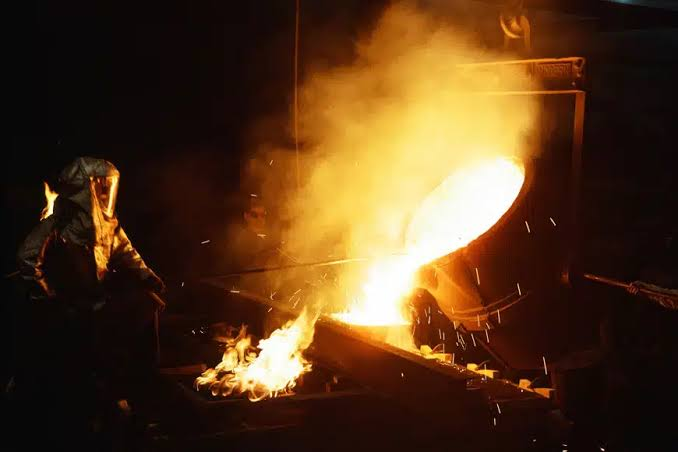
The fluidity of molten metal is its ability to flow and fill the mold cavity before it solidifies. In casting, the term does not mean the inverse of viscosity, as it does in physics. Casting fluidity is a practical measure: how far the metal can travel through a channel before solidification stops it.
Poor fluidity is the direct cause of the two defects most often seen in thin-walled castings, cold shuts and misruns.
Why Fluidity Matters
- It sets the minimum wall thickness. The better the fluidity, the thinner the wall that can be cast.
- It sets how sharp the details are. Raised lettering, thin fins, and sharp corners only fill if the metal is still liquid when it reaches them.
- It shapes the gating design. A metal with low fluidity needs larger and shorter channels and more gates.
Factors That Affect Fluidity
1. Pouring temperature and superheat
Superheat is the difference between the pouring temperature and the temperature at which solidification begins (the liquidus). The greater the superheat, the longer the metal stays liquid and the farther it flows. This is the easiest factor to adjust on the shop floor.
2. Composition and solidification mode
- Pure metals and eutectic alloys freeze at a single temperature with a smooth solidification front, so the channel stays open longer. Their fluidity is high.
- Alloys with a wide freezing range form crystals that drift in the stream. The flow turns mushy and stops early. Their fluidity is low.
Aluminum-silicon alloys, for example, flow most easily near the eutectic composition of about 12% silicon. In cast iron, fluidity rises with carbon equivalent, and phosphorus raises it as well.
3. Melt cleanliness
Oxide films and inclusions hold back the flow. Aluminum, and copper alloys that contain aluminum, form a strong oxide skin on the front of the stream, which makes it hard for two streams to fuse when they meet.
4. Mold properties
- Mold material: a metal mold draws heat away much faster than a sand mold, so the metal stops sooner.
- Mold temperature: a preheated mold extends the flow distance.
- Mold coating: an insulating coating slows heat loss.
- Moisture and venting: gas trapped in the cavity creates back pressure that resists the flow.
5. Pouring practice and gating design
A greater pouring height gives more pressure. Fast, unbroken pouring keeps the metal hot all the way to the far end of the cavity. Long, narrow, winding channels use up the heat before the metal arrives. The design principles are covered in our article on gating and riser system design.
How Fluidity Is Tested
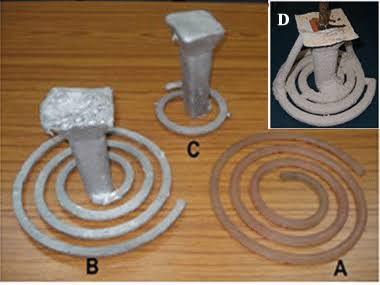
Spiral test. This is the most common method. Metal is poured into a sand mold with a spiral channel of constant cross-section. After solidification, the filled length of the spiral is measured. The longer it is, the higher the fluidity.
Vacuum suction test. Molten metal is drawn into a narrow tube under a constant vacuum, and the length of the solidified column is measured. This method is better controlled, because it does not depend on how the operator pours.
Results from either test can only be compared when the pouring temperature, mold material, and test procedure are the same. A fluidity value is not a fixed material property like density.
Relative Fluidity of Common Casting Metals
| Metal | Relative fluidity | Notes |
|---|---|---|
| Gray cast iron | High | High carbon and silicon, close to eutectic |
| Aluminum-silicon alloys | High | Best near the eutectic composition |
| Yellow brass | Good | Relatively low pouring temperature |
| Ductile iron | Moderate to good | Magnesium treatment adds dross |
| Tin bronze | Moderate | Wide freezing range |
| Cast steel | Low | High pouring temperature, loses heat fast |
This table is a qualitative comparison for typical casting conditions. The order can shift with composition and superheat.
How to Improve Fluidity
- Raise the pouring temperature within the limits the alloy allows.
- Adjust the composition toward the more fluid side where the specification allows, for example the carbon equivalent of cast iron.
- Clean the melt with fluxing, filtration, and skimming.
- Preheat the mold, or use an insulating coating on metal molds.
- Improve mold venting so air and gas escape easily.
- Shorten and enlarge the channels, or add gates for distant sections.
- Pour faster without making the flow turbulent.
On the product design side, walls that are too thin for the fluidity of the chosen metal are best avoided from the start, as explained in our guide to design for castability.
The Limit: Pouring Temperature Cannot Keep Rising
Raising the pouring temperature is the easiest fix, but it has a cost:
- more gas dissolves in the melt, so the risk of porosity rises,
- liquid shrinkage increases, so the risers have to work harder,
- the metal penetrates between sand grains more easily and leaves a rough surface,
- the grain structure becomes coarser,
- in brass, more zinc boils off, as explained in our article on brass casting.
For that reason, the pouring temperature is set as low as possible while the mold still fills completely.
Frequently Asked Questions
What is the difference between fluidity and viscosity? Viscosity is a physical property of a liquid, its resistance to flow. Casting fluidity is the combined result of viscosity, solidification mode, melt cleanliness, and mold conditions. Two metals with similar viscosity can have very different fluidity.
Why is cast steel harder to pour into thin sections? Its pouring temperature is high, so the temperature difference with the mold is large and heat is lost quickly. Its freezing range also makes the flow thicken early.
Which metals have the best fluidity for thin castings? Gray cast iron and near-eutectic aluminum-silicon alloys are among the easiest to pour into thin walls in sand molds.
Conclusion
Fluidity is the distance molten metal can travel before it solidifies. It depends on pouring temperature, composition, melt cleanliness, the mold, and the gating design. When a casting does not fill completely or shows a seam line, those five factors are the ones to check one by one, starting with pouring temperature.
Related Articles
- Digital Simulation in Metal Casting: Preventing Defects Before Physical Production
- Cold Shut and Misrun Defects in Metal Castings: Causes and Prevention
- Gating and Riser System Design in Metal Casting
- Brass Casting: Process, Pouring Temperature, and Common Defects
- Design Principles for Easier Metal Casting (Design for Castability)


